
Young, overstimulated and overwhelmed
Who likes ASMR?

Based on the findings from the interviews we did with consumers and creators of ASMR content, our observations of trends, and data already available, we set out to explore the relationship between enjoyment of ASMR, age, sensory sensitivity and social sensitivity.
We surveyed a representative sample of 2092 adults living in the UK, showing them the four ASMR videos you watched at the start of this piece and asking for their reactions to them.
We also asked a series of questions designed to understand their preferences and sensitivity to social and sensory stimulation, for example whether they felt energised around other people, preferred working alone, or found social interactions challenging, and whether they felt overwhelmed in busy public spaces or often felt the need to shut out noise.
The results showed:
Younger people were more likely to watch and enjoy ASMR
Younger people were more likely to say they found the world overstimulating
People who said they found the world overstimulating were more likely to watch and to enjoy ASMR content.


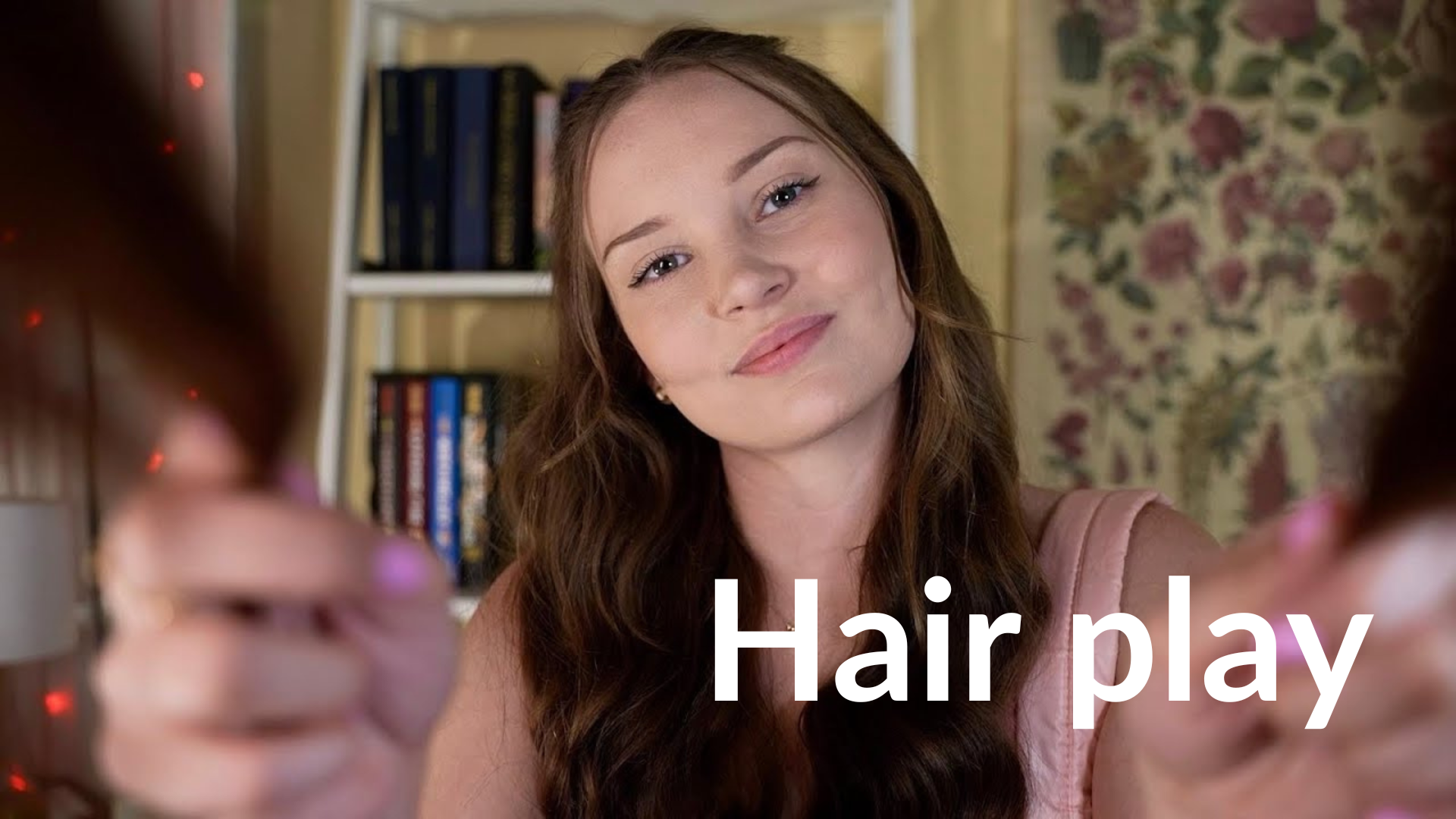

Younger adults are the biggest fans
Younger people were the most likely to say that they had previously seen, watched and enjoyed ASMR videos.
This relationship was particularly pronounced for the ‘slime’ ASMR video, with 18 to 24-year-olds more than four times as likely to say they enjoyed it as people aged 45 to 54.
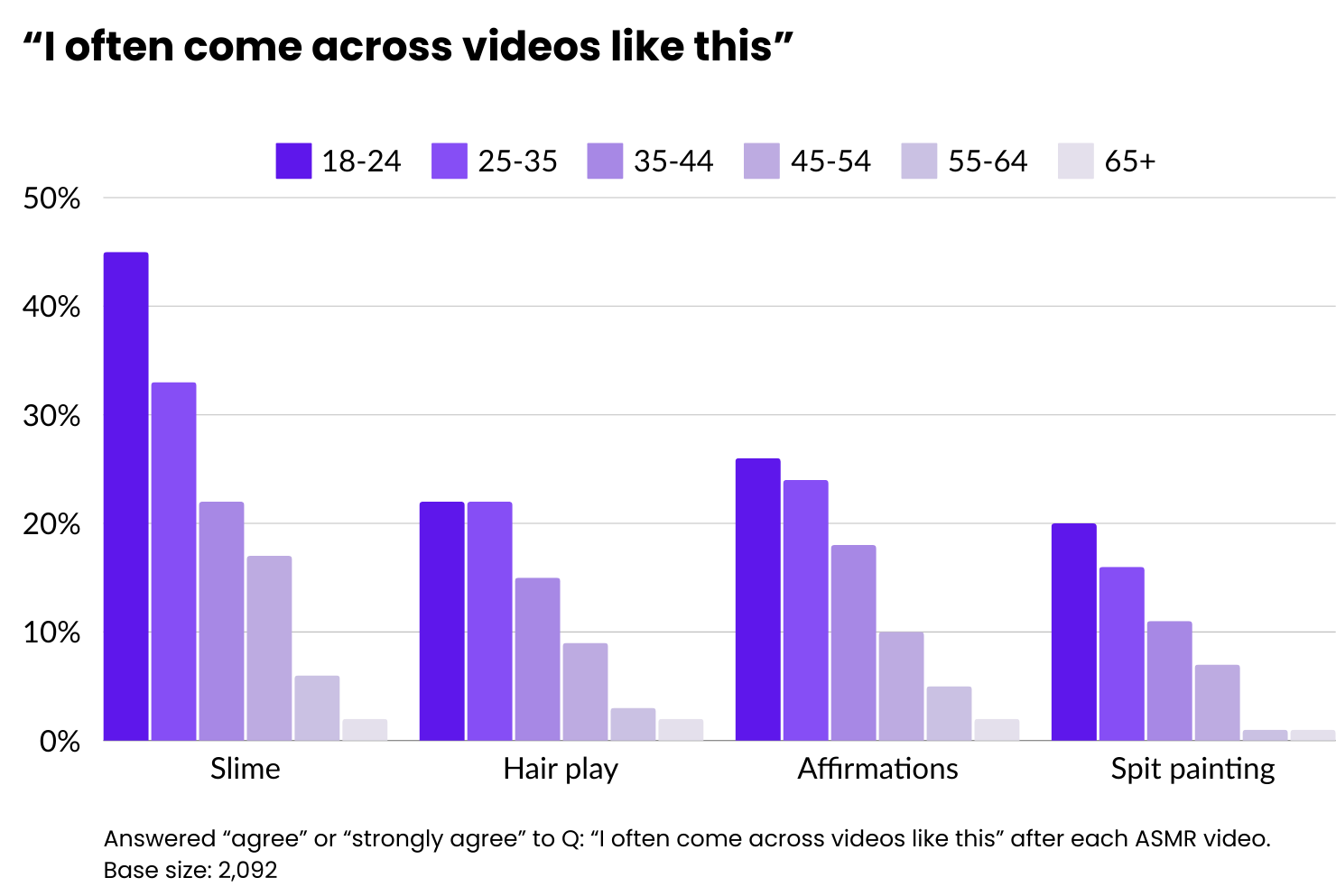
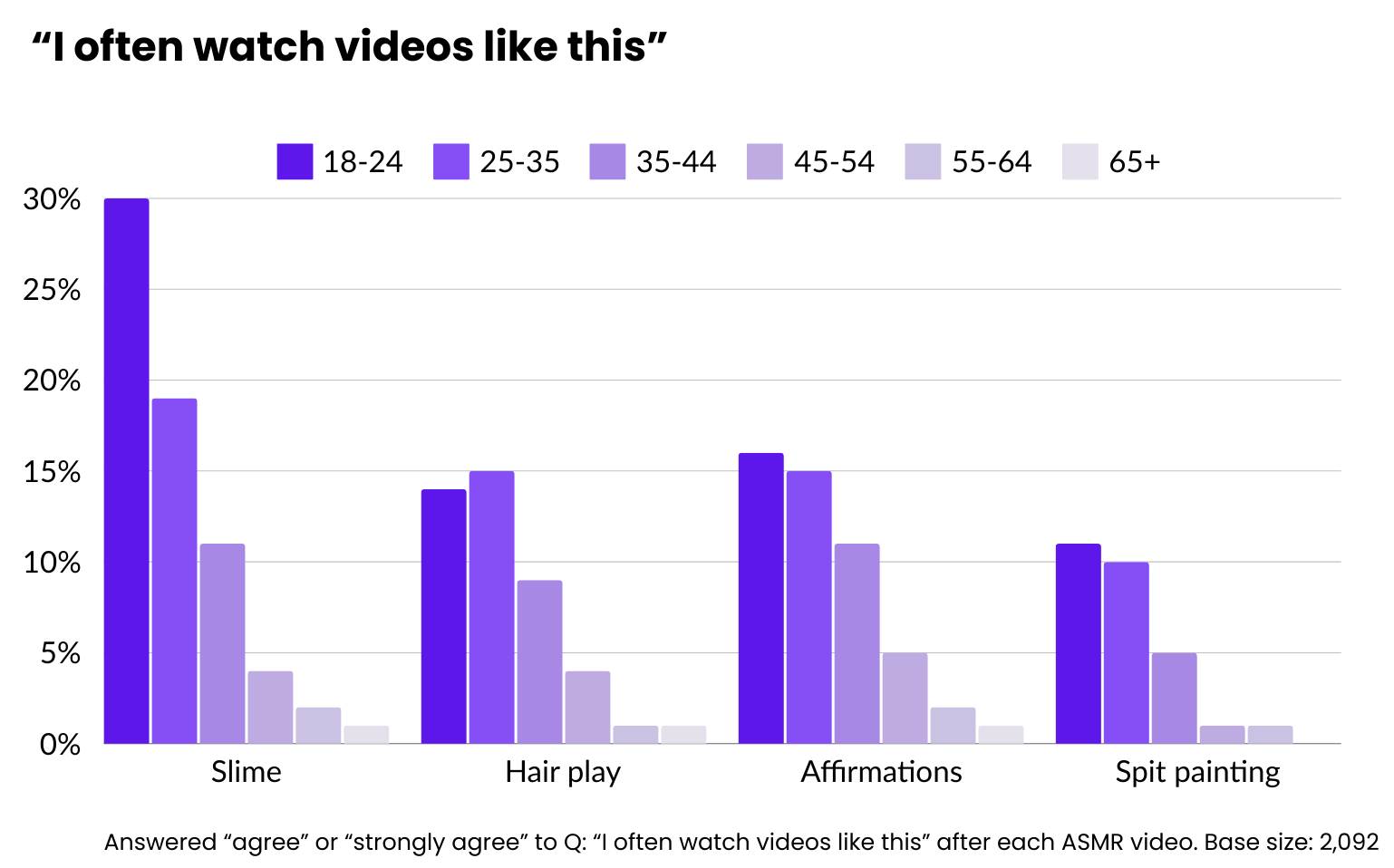
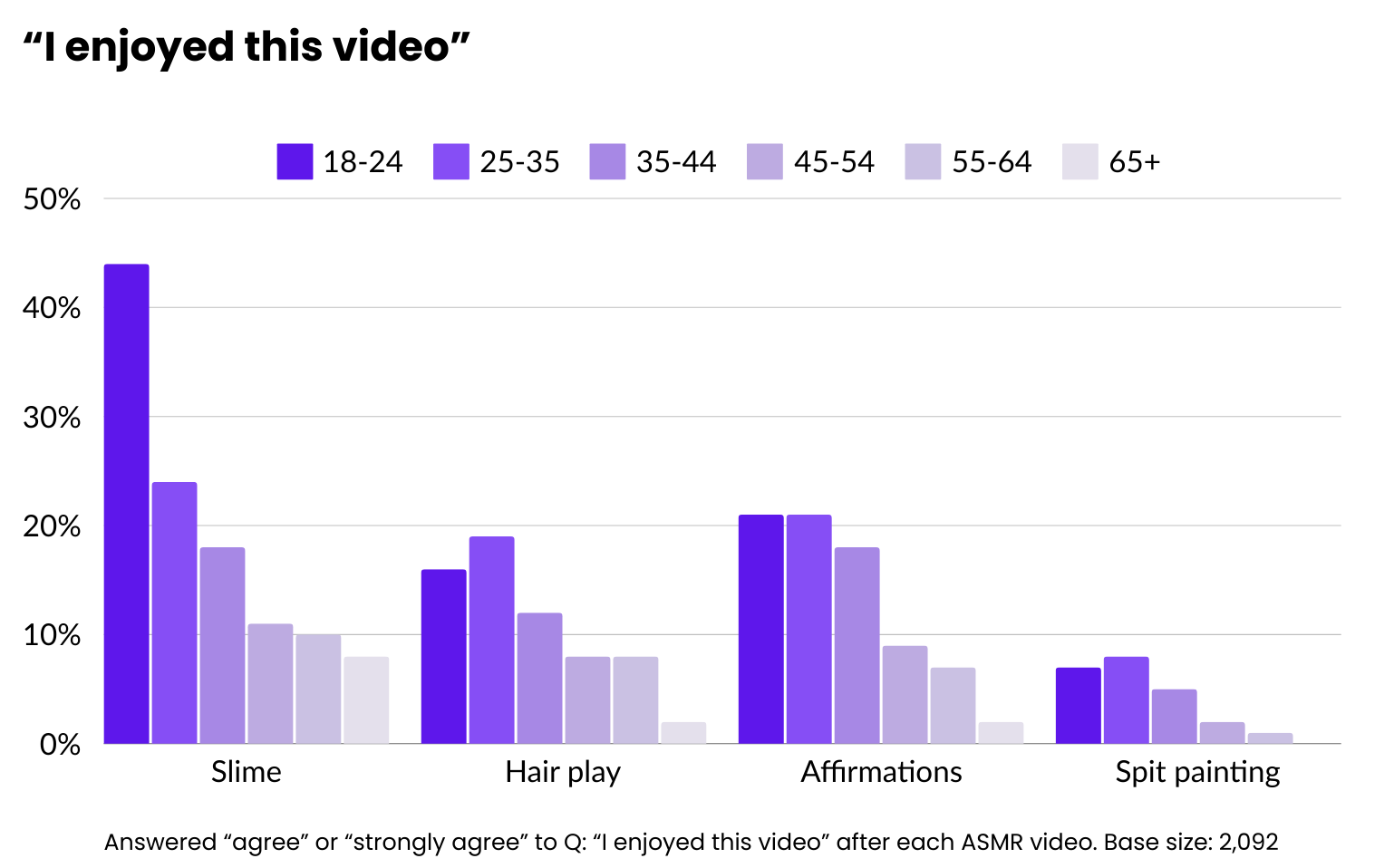
Of course, younger people also tend to spend more time on social media, so they may just have had more opportunity to come across, watch, and discover that they enjoy these types of videos.
Echoing other data, in our survey around two-thirds of 18 to 24-year-olds said they spent a lot of their free time on social media, compared with around one-third of those aged 45 to 54.

More younger people find the world ‘too much’
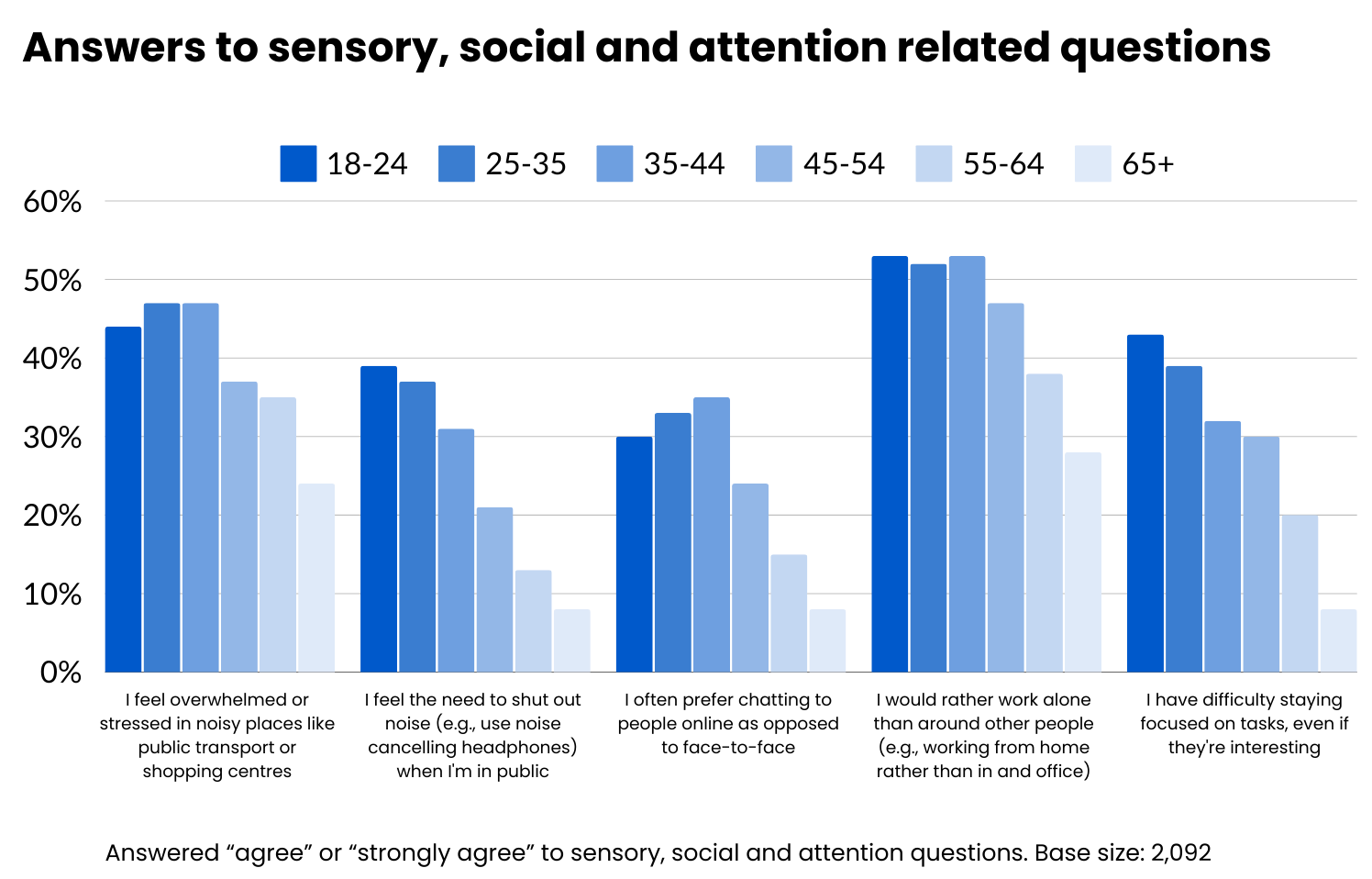
Of the 2,092 adults who took our survey, 37% said they felt overwhelmed or stressed in noisy places such as shopping centres or on public transport.
More than one-fifth (22%) said they felt the need to shut out noise using devices like noise-cancelling headphones when in public.
Another 22% said they often preferred chatting to people online rather than face-to-face, and 43% would rather work alone, for example work from home, than around other people.
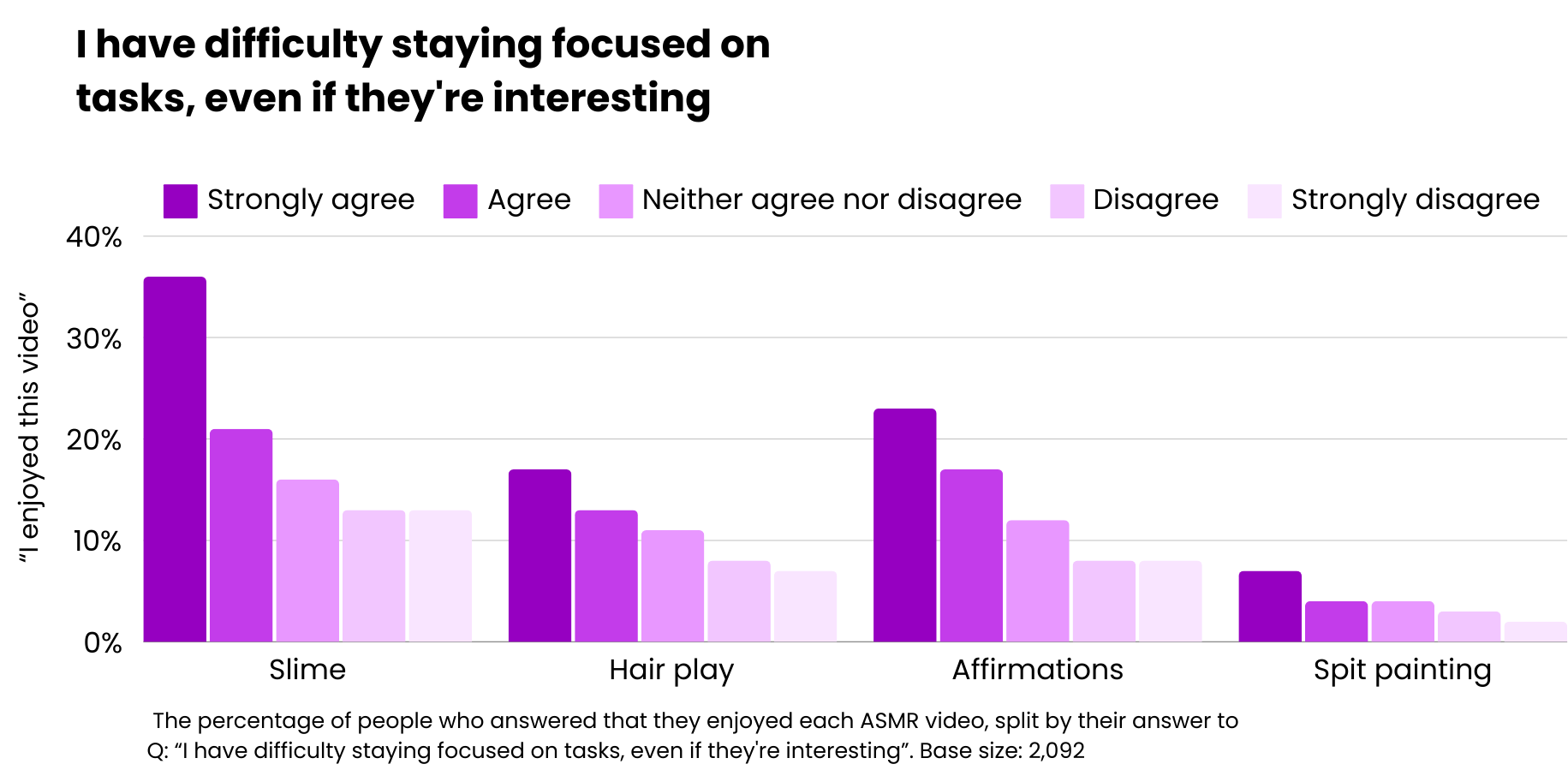
Around a quarter (26%) said they had difficulty staying focused on tasks even if they were interesting.
We used the answers to these questions to determine people’s sensitivity to social and sensory stimuli. We found women were a little more likely to say they felt overwhelmed in noisy places (43% of women compared with 31% of men), that they found social interactions challenging and sometimes felt awkward or out of place (47% of women vs 39% of men).
However, the relationship between age and sensitivity was even more pronounced. For most of these questions on social and sensory sensitivity, agreement was highest among the younger ages in the sample (ages 18 to 44), got steadily lower with increasing age for people 45 and over, and was lowest among people aged 60 and over.
This tendency to want to shut out noise, to shield themselves from outside stimuli, seems more prevalent among younger people.
In some cases, the differences are large:
47% of those age 25-34 say they feel overwhelmed in noisy or busy places, vs 35% of those age 55-64, dropping to 24% of those age 65+.
39% of those age 18-24 feel the need to shut out noise, for example using noise cancelling headphones in public, compared with only 21% of those age 45-54, dropping down to 13% for 55-64s and only 8% of 65+.
People who find the world ‘too much’ like ASMR more
So we know younger people are more likely to see, watch and enjoy ASMR, and we know more younger people say they find the world overstimulating.
Are the people who find the world overstimulating also more likely to watch and to say they enjoy ASMR? Yes.
We asked the survey participants if they often came across videos similar to the ones we included in the survey – recommended on their social media feeds, for example – and whether they often watched similar videos online, for example they sought them out, or paused to watch them when they saw them.
People who reported being more sensitive to social and sensory stimuli were more likely to see, watch, and enjoy ASMR videos.
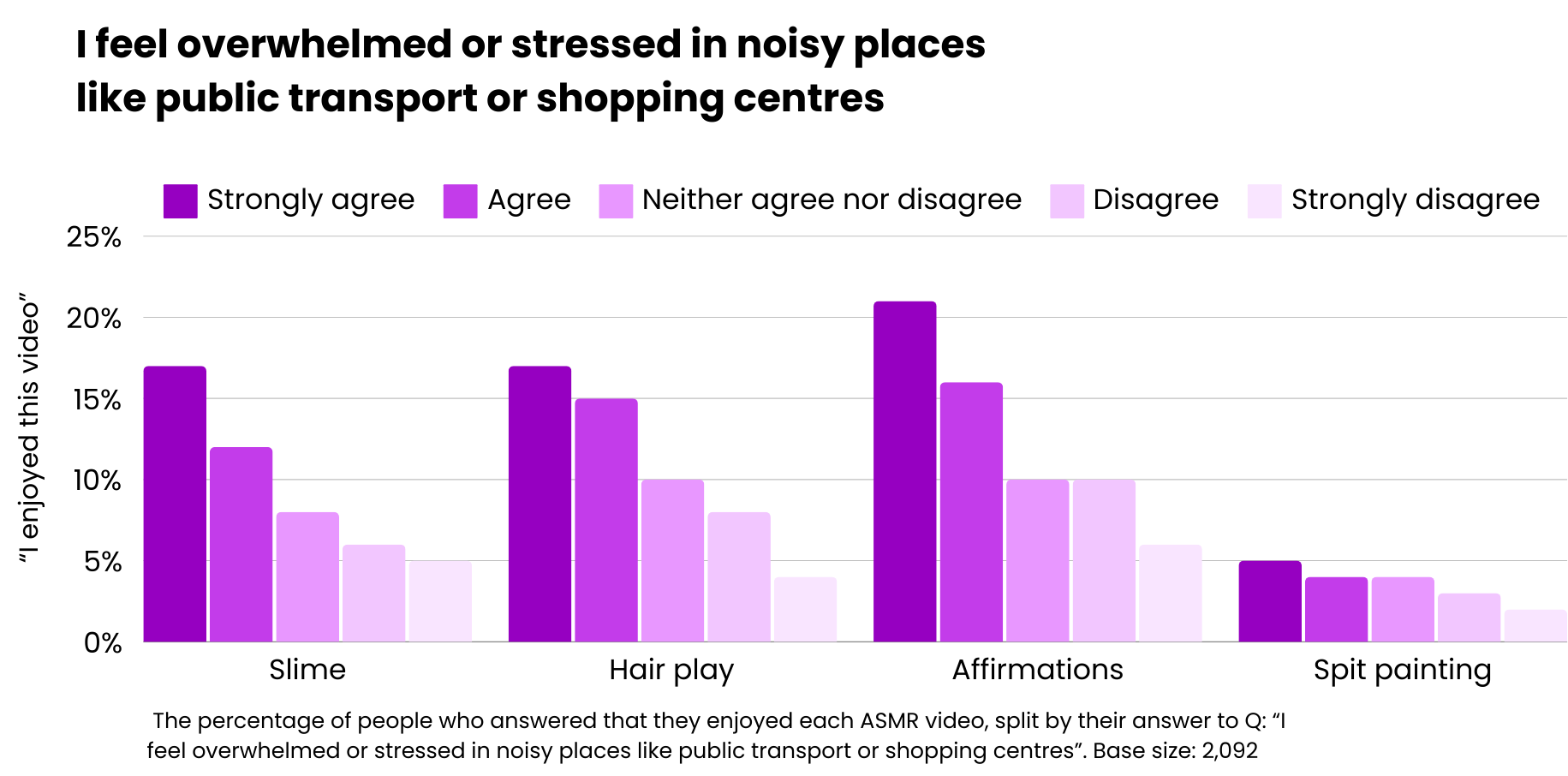
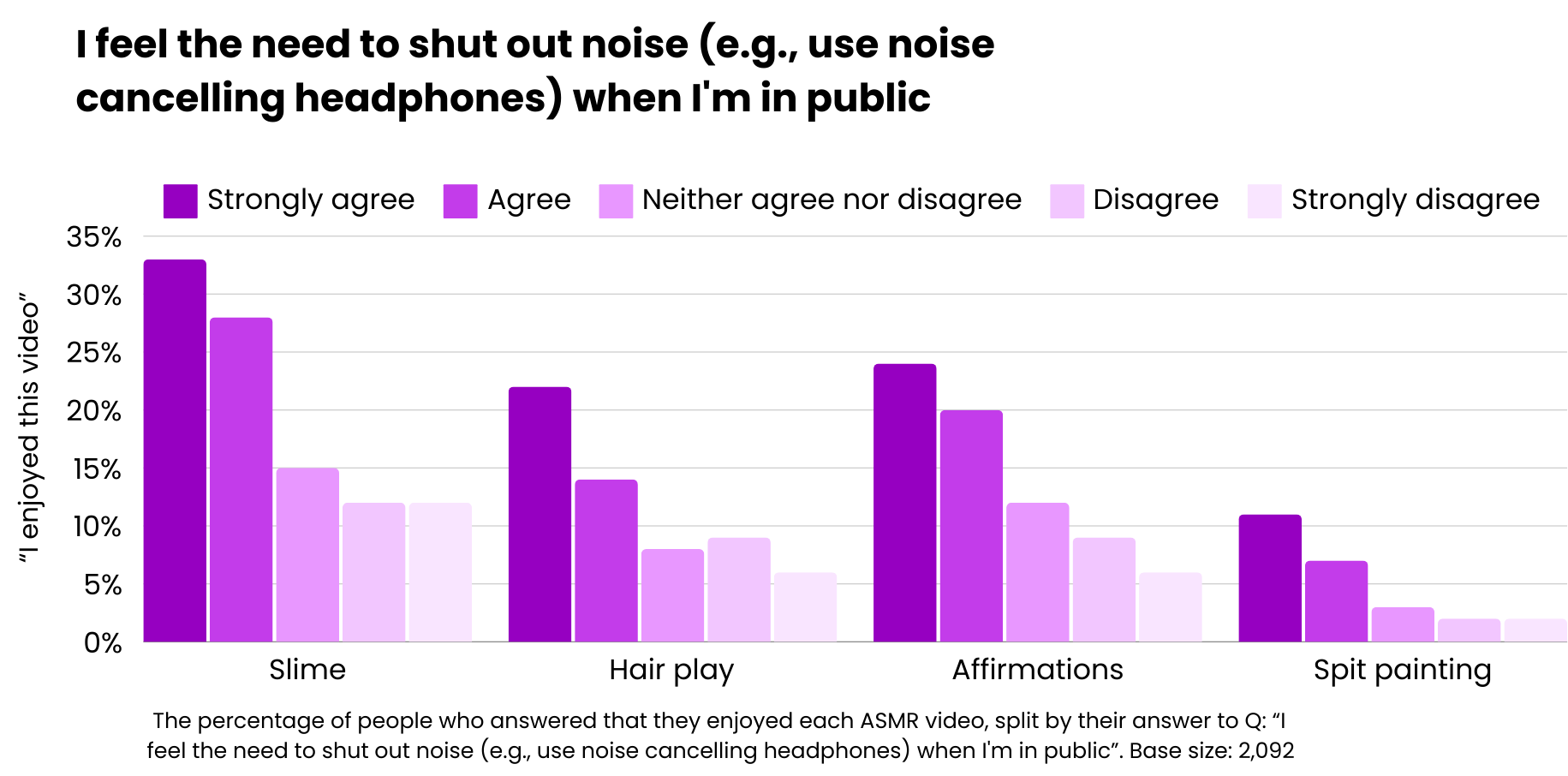
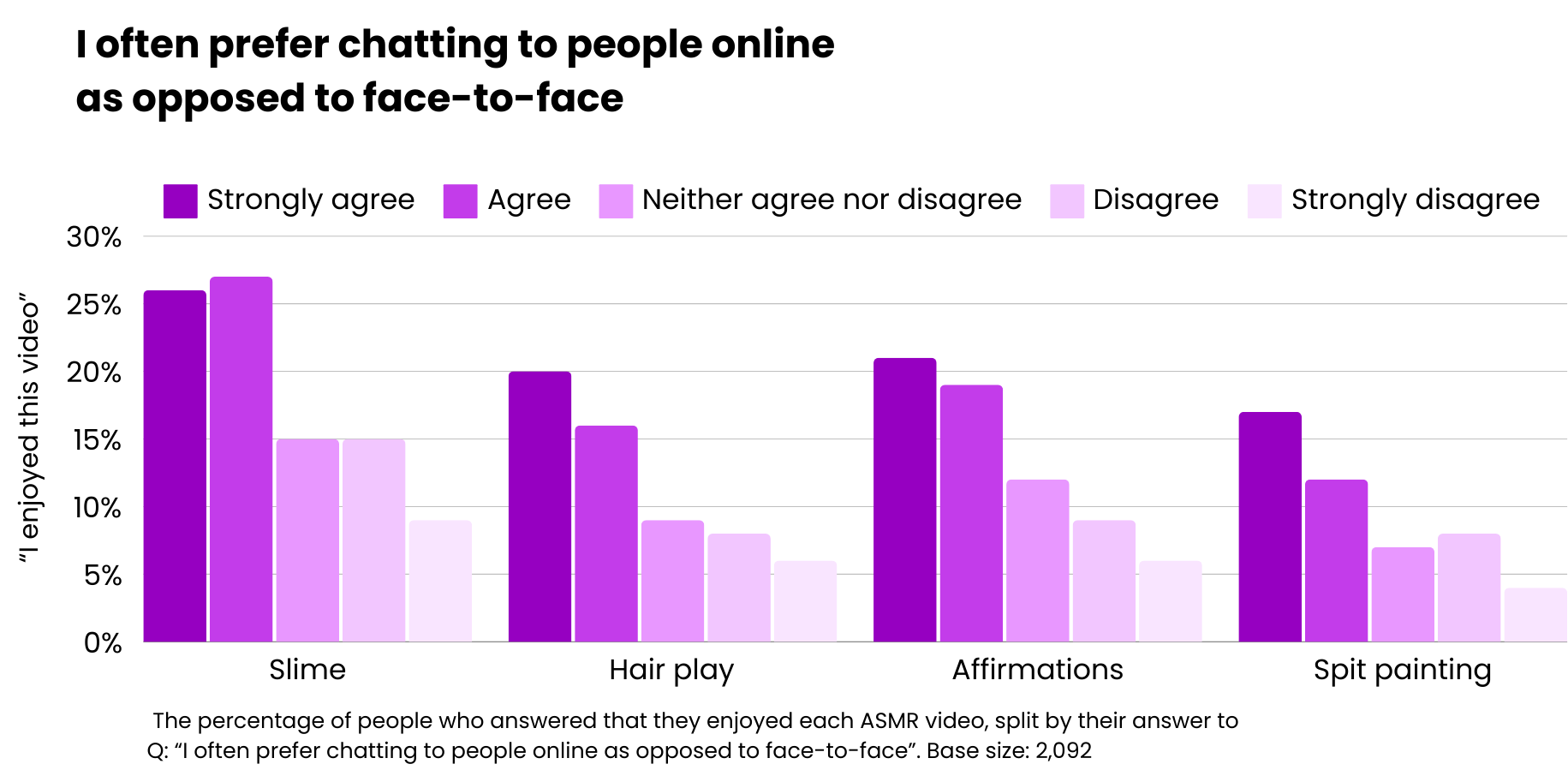
We also found a close correlation between people who reported being more sensitive to social stimuli and those who said they were more sensitive to sensory stimuli, suggesting they are likely to be largely the same people.
And it is these people who were reporting greater enjoyment of ASMR.
Given many of the ASMR fans we interviewed had said they watched ASMR videos to help them concentrate or to distract themselves from things they found difficult, we also asked a question in the survey about whether participants had difficulty staying focused on tasks, even if they were interesting. Answers to this question followed the same trend: people who said they found it more difficult to concentrate were also more likely to say they enjoyed all four examples of ASMR video.
Age is the strongest predictor of ASMR enjoyment
We can see there’s a relationship between age, sensory and social sensitivity, and enjoyment of ASMR. Younger people are more likely to agree with the statements suggesting they find noise overwhelming, social situations challenging, and concentration difficult, they’re more likely to report that they spend a lot of their free time on social media, and they are also more likely to see, watch, and enjoy ASMR.
We wanted to explore which of these factors independently explains people’s enjoyment of ASMR the most. To explore which factor shows the strongest relationship with enjoyment of ASMR, we carried out a series of statistical regression analyses looking at the variables that best predicted whether people enjoyed watching ASMR.
The analyses revealed that age was the strongest predictor of enjoyment of three out of the four ASMR videos we tested, independently of other factors like, e.g., how much free time they spent on social media, or their preference for chatting online versus face-to-face.
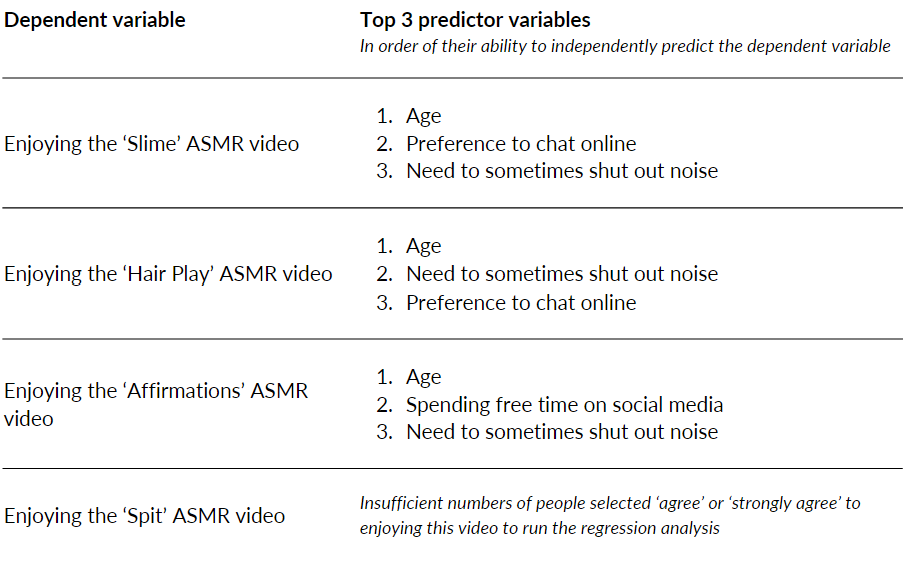
These surveys can only ever tell us about correlational relationships between different variables, not direct cause-and-effect. However, our analysis suggests that age itself—even when considering factors like social media use, sensory sensitivities, and attention difficulties—is a strong predictor of ASMR enjoyment. It appears there's something specific about this younger cohort that makes them more likely to enjoy these videos.

Summary
We surveyed over 2,092 adults living in the UK, showing them videos of four different types of ASMR (focusing on affirmation, hair, slime, saliva) and asking how often they saw them and whether they enjoyed them.
We also asked a series of questions designed to understand their preferences and sensitivity to social and sensory stimulation
The survey data revealed:
Younger people are more likely to come across, watch and enjoy ASMR videos
More younger people than older people say they find the world overstimulating
People who find the world overstimulating are more likely to watch and enjoy ASMR content
Regression analysis revealed that age was the strongest predictor of enjoyment for three out of our four ASMR videos , suggesting that there is something specifically related to younger cohorts that predicts that they will enjoy ASMR videos more than older generations.
Read chapter 5: The appeal of ASMR
A four-part chapter exploring some of the themes that often come up in ASMR, and why people seem to like them.
Sign up to hear more
Get in touch
If you have any questions or would like to talk to us about this work, feel free to email: damon.deionno@revealingreality.co.uk to speak with the research team.
+44 (0)20 7735 8040
The Ballroom, Maritime House, Grafton Square, SW4 0JW
September 2024