The appeal of ASMR
Slime and saliva

“In primary school we were just all obsessed with slime.
I remember I used to be so obsessed with it because I just wanted to sort of touch it because it was quite sensory… And the sounds it makes as well.”
Jasmine, 17
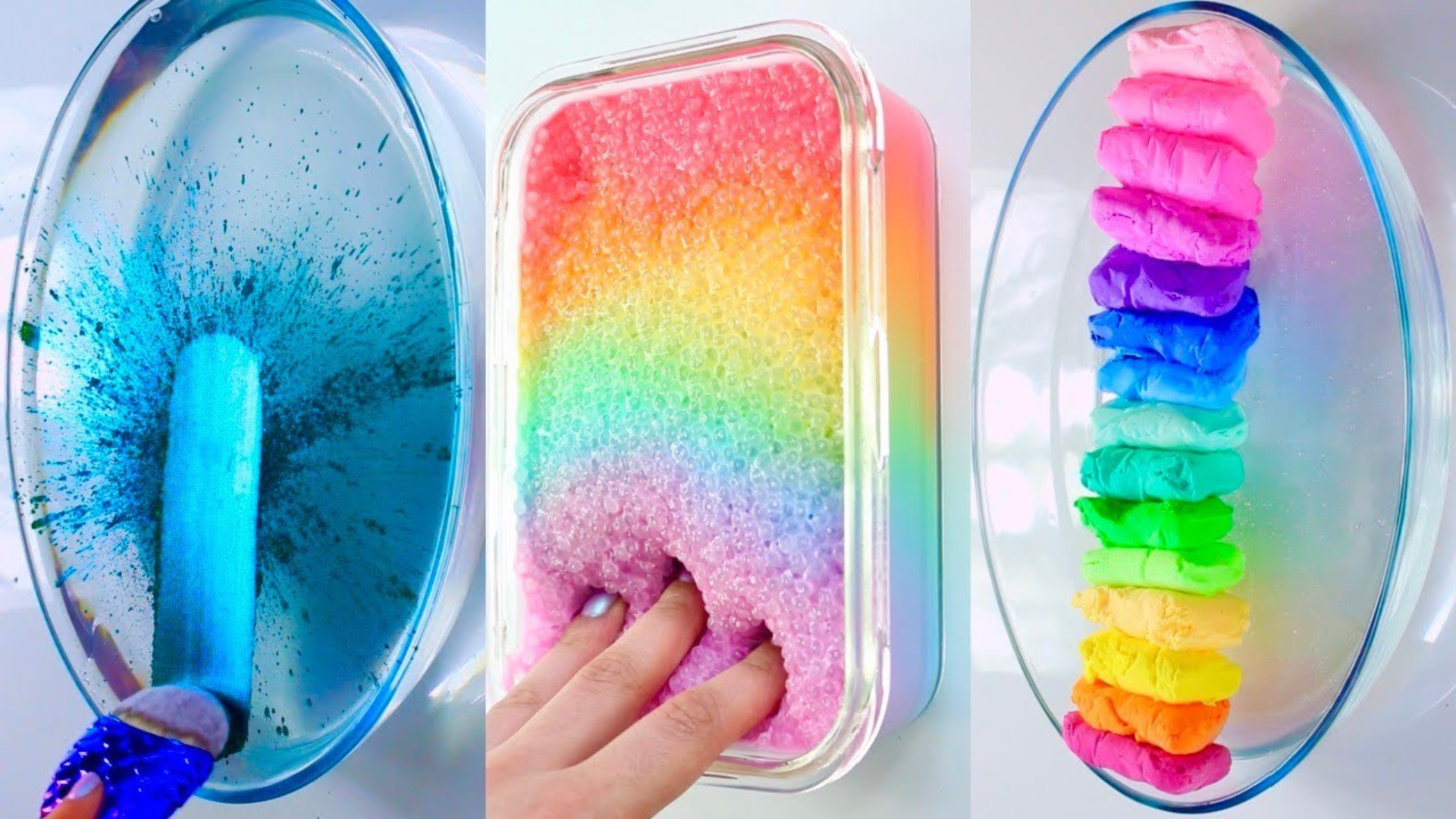
Because ASMR videos are designed to appeal to the senses, both aurally and visually, they often emphasise vicarious experiences of touch and texture. The tactile qualities of materials like soap, chalk, skin, hair, water, fabric, glue – even food and saliva – are often the focal point. Many of them feature ‘slime’ being manipulated – close-ups of fingers squishing and squeezing brightly coloured, shiny, artificial goo.
‘Slime’ as a product experienced a significant surge in popularity around 2016-2017, driven in part by its viral presence on social media platforms like Instagram and YouTube. As well as making and playing with slime in real-life, children became captivated by watching so called ‘satisfying’ slime videos online.
Satisfying Slime ASMR
Clip taken from a 20 min video with 10 million views on YouTube
Both Jasmine and Ivy mentioned that they enjoyed the nostalgia they felt when watching slime videos.
“During quarantine, everyone was bored at home. I saw ASMR of someone, like, playing with slime. And I remember I hadn't seen slime in years. I was like, oh, my gosh. I just got, like, nostalgia from that.” – Jasmine, 17
“I used to be really into, like, the slime videos because I used to make slime all the time… It was entertainment. It also just looks really fun and it’s very, like, very nostalgic.” – Ivy, 17
Developmental psychologists cite the benefits of playing with slime in fulfilling children’s needs for tactile play. In an increasingly digital and sanitised world, slime provides a hands-on, messy play experience that is often lacking in children's lives. Where children might once have made mud pies, they now play with slime.
But slime is not like mud. Mud is natural. Gritty, sloppy, sometimes smelly, sometimes unhygienic. We don’t always know what’s in it, and we might be unpleasantly surprised. We can mix in sand, leaves, twigs, whatever we can find.
Slime by contrast is usually characterised by a much more predictable texture - smooth, consistent, synthetic. It’s clean, brightly coloured and often perfumed, with names like “hot pink bubblegum” or “unicorn delight”. Many slime videos involve the deliberate combining of contrasting textures – plastic beads folded into a translucent goo, chalk crumbled into jelly.
Watching slime videos probably appeals to our instincts to touch, feel and manipulate the world around us, but without any of the dirt or germs. The videos are satisfying, but sanitised.
But this focus on tactile, sensory stimulation also extends to more intimate sounds and substances.
From ‘mukbangs’ – videos showing the creator noisily eating food – to ‘personal attention’ whispered role-plays, to more obviously sexualised ASMR videos, mouth sounds are often exaggerated and emphasised in the recordings.
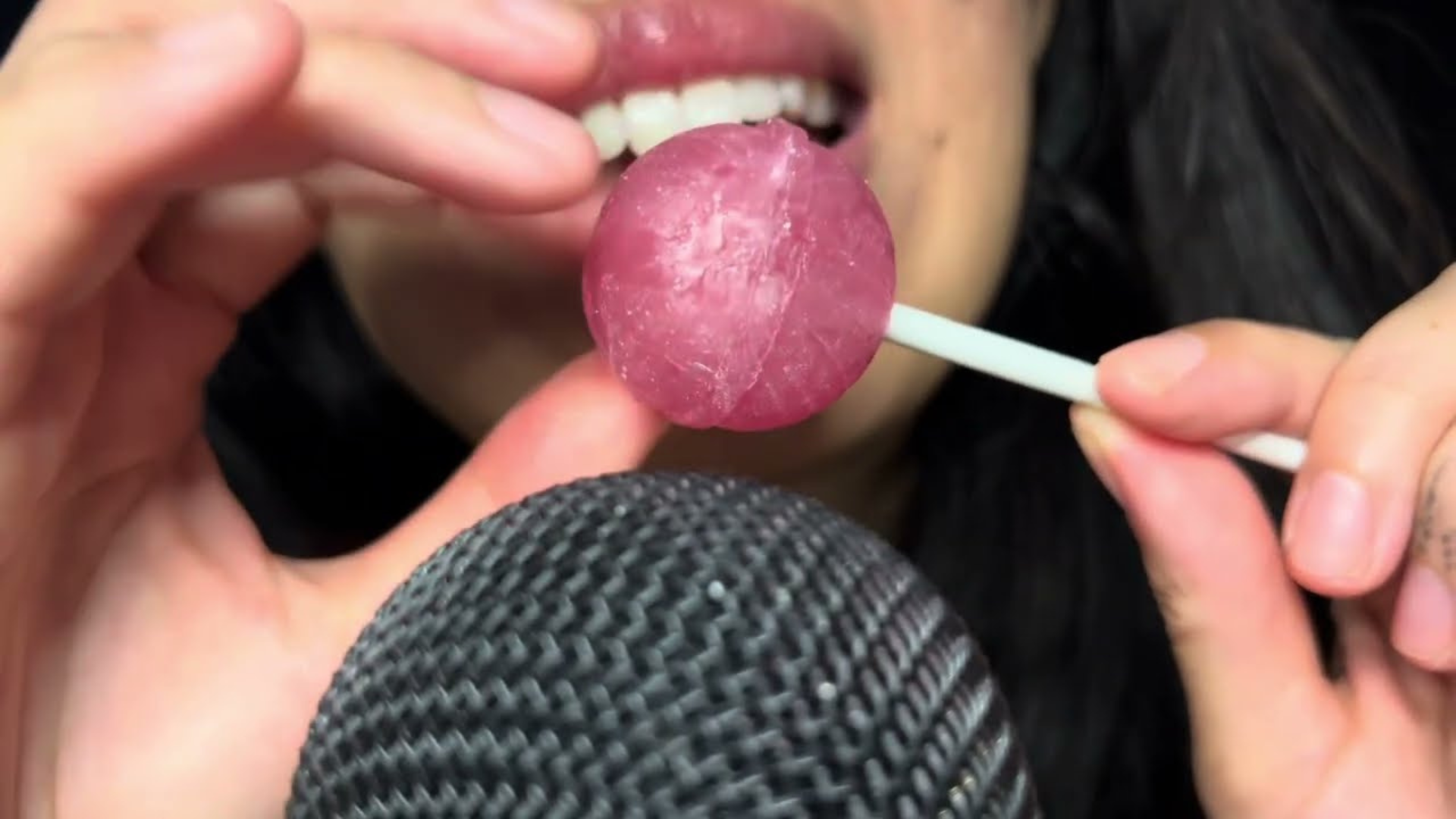
The sounds made by someone’s mouth when they whisper close to the microphone, or when they lick their fingers, a lollipop or the microphone itself, feature heavily in many genres of ASMR videos. ‘Binaural ear-licking ASMR’ videos are also a subcategory of their own.
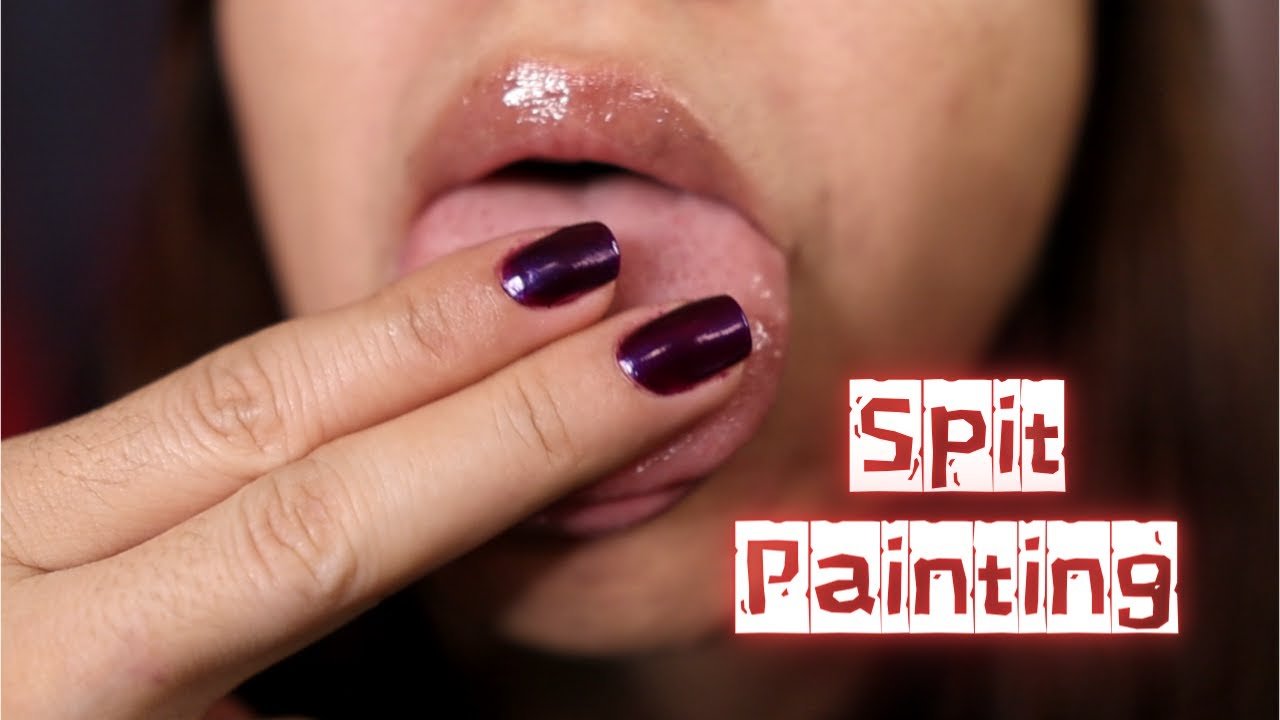
‘Spit painting’ (as in the fourth video you watched at the start of this report) is another sub-category – in which the ASMRtist uses his or her own spit to ‘paint’ on the camera, as if applying it directly to the viewer’s face.
The comments below these videos thank the creator for the ‘tingles’ and for making content that ‘triggers’ their ASMR. Often they talk about listening to the videos as they fall asleep, or while they’re working, or as a distraction from their anxiety or ‘bad thoughts’. Some speculate whether spit painting videos appeal to a childhood nostalgia for having a parent clean their face. Other’s suggest it may have a more sexual undertone.
Whether platonic or not, these videos portray much more intimate interactions, which raises the question of whether they connect with human cravings for intimacy with others. Humans are ‘wet’ animals - our bodies are largely made of water. And in families and sexual relationships, the more intimate we are, the more likely we are to exchange bodily fluids – or at least not to mind them.
ASMR MUKBANG
Clip taken from a 17 min video with 127 million views on YouTube

Asmr experiment mouth sounds with lollipop
Clip taken from a 10 min video with 12k views on YouTube
ASMR Mouth Sounds Spit Painting and Gloss - No talking
Clip taken from a 15 min video with 99k views on YouTube

Summary
Why are slime videos so popular? Developmental psychologists cite the benefits of playing with slime in fulfilling children’s needs for tactile play. But, unlike mud, slime is synthetic. Watching someone else manipulating it on a screen probably appeals to our instincts to touch, feel and manipulate the world around us, but without any risk, or the actual tactile experience. ASMR slime videos are satisfying but sanitised.
Saliva and mouth sounds feature heavily in many genres of ASMR videos, from Mukbangs to Spit Painting. The reason people enjoy them isn’t clear, but their evident intimacy may relate to familial, social, or sexual interests.
Read chapter 6:
Cause or effect?
Reflecting on why young people in particular seem to find ASMR videos appealing
Sign up to hear more
Get in touch
If you have any questions or would like to talk to us about this work, feel free to email: damon.deionno@revealingreality.co.uk to speak with the research team.
+44 (0)20 7735 8040
The Ballroom, Maritime House, Grafton Square, SW4 0JW
September 2024