
INFINITE
SCROLL
Growing up on TikTok
This report presents the most up-to-date, detailed portrait of a child's life on one of the most popular social media platforms among children in the UK today – TikTok. The research draws on multiple methods. Some are technical: data from the children's phones showing exactly which apps they use, for how long and at what times. Data from TikTok itself, exported under GDPR, showing every single video a child was served and how long they watched it for. Some methods are simpler: watching screen recordings of children scrolling, and asking them directly what they think about their own use.
Many children are now spending a significant proportion of their childhood on social media. As researchers who have spent the past 10 years understanding and observing children’s media behaviours, one of the clearest shifts we have seen is the rise in time spent scrolling through short-form video content — or, as many children would call it, “doomscrolling.”
This is why we have decided to take a deeper look at one of the main platforms where we currently see this behaviour play out: TikTok. However, scrolling through short-form video content is by no means limited to TikTok, with many other social media platforms adopting similar features — from Instagram Reels to YouTube Shorts.
"It's just a bit of fun."
"It's how kids connect now."
"It's how they learn about the world."
"It's how they express themselves."
But have you actually looked?
Actually looked at what they are doing when they are on TikTok. At what fills the feeds they scroll through. At what keeps them there for hours a day. And at what children are gaining in return for their time.
Because if children were spending hours a day in any other space, we would want to understand that space properly.
We would want to look.
This report shows what happens when childhood meets the infinite scroll, looking closely at the experience itself: what children see, what keeps them scrolling, what they take from it, and how it shapes the way they spend their time.
If you do nothing else, watch just one minute of Charlie, a 14-year-old boy, scrolling through his TikTok "For You" page. It offers a glimpse of what he sees when he spends time on the platform.
Charlie spends an average of three hours and a half a day doing this. It is worth taking one minute to see what that time looks like.
TikTok is a big part of childhood
TikTok is one of the most popular social media apps used by children today. Of the hundreds of children we meet every year, a large proportion of them spend several hours a day on TikTok. That’s hundreds or even thousands of videos, every day.
When TikTok first rocketed in popularity during the Covid-19 lockdowns, many children reported regularly seeing shocking and upsetting content. In the past couple of years, it is true that for most children, we see a lot less explicitly harmful content on their feeds . Fewer self-harm scars, less violence, minimal explicit nudity.
But connection? In this report, we show that on TikTok, children spend almost all of their time passively scrolling and consuming. It’s rare for a post by a friend to pop up in the feed. Interaction with people they actually know makes up a very small proportion of time spent on the platform — and even then, it is often limited to lightweight exchanges, such as sending thumbs-up emojis to maintain ‘streaks’.
Children are learning about the world on TikTok. This report shows what world they’re seeing: feeds are made up of a targeted reflection of what commercial actors think will capture their attention. That includes posts about sports they’re interested in or bands they like. It also includes gambling adverts, Only Fans actors promoting their channels, beauty influencers selling makeup.
A bit of fun? For many children in this research it’s hours a day, thousands of videos a week, it’s during the school day and it’s at 3am. Children say it’s entertaining and good for filling time when they’re bored. But they also say they feel tired, guilty or disappointed in themselves afterwards. Children use phrases like “doom scrolling” and “brain rot” to describe what it feels like. They regularly describe feeling out of control, spending longer than they meant to, or even describe themselves as “addicted”.
To understand the impact TikTok has on children, we have to look at it
A handful of platforms are shaping the lives of a generation of children. There is a strange lack of curiosity about something children spend hours a day with. The amount of research or journalism that actually examines what children see and do on them is, relative to the impact, very small. Imagine if we had such little idea of what children watched on TV, or learned at school.
Over the last fifteen years, we’ve worked hard to make children’s online lives more visible. We’ve developed new methodologies to bring to light what they see, where they click, what they post, when, where and how they scroll. In our experience there is nothing that changes how people think about children’s social media use than forcing them to sit through 5 minutes of your average child’s TikTok feed.
This report is an opportunity to see through the eyes of children, and understand TikTok from their perspective.
TikTok is a short-form video-sharing app built around an endless, algorithmically personalised feed of videos.
These features are not unique to TikTok. Over time, platforms copy each other’s most successful features.
Social media companies primarily make money through exposing users to advertising. They therefore design their platforms to keep users on them for as long as possible.
Features that successfully build usage habits on one platform tend to get copied by others. Streaks — daily reminders that reward users for opening an app consecutively — were introduced by Snapchat in 2016 and have since been adopted by TikTok, Duolingo, Strava and others. Filters and beautifying tools are now near-universal, encouraging people to post more by making it easy to alter their faces and bodies. Stories — posts that disappear after 24 hours — began on Snapchat and spread to Instagram, Facebook and WhatsApp.
Scrollable feeds first emerged as far back as 2006, when Facebook launched the ‘News Feed’. But TikTok perfected the combination of an infinite feed with algorithmically selected short-form video. It’s ability to capture and keep user attention was powerful, and quickly duplicated by other companies.
For a detailed breakdown of specific features across all major platforms – and a timeline of how appeared , click here.
When we speak to children and young people about how they use TikTok – and observe them using it in practice – most of their time spent on the app is scrolling the “For You” page.
While TikTok includes features such as group and one-to-one messaging, children and young people more commonly use other platforms – particularly Snapchat – for direct communication.
The vast majority of time spent on TikTok is not social – it’s scrolling.
The data in this report represents the most detailed portrait of a child’s life on TikTok so far
This report collates data collected in 2026 from a range of different methods we use to explore children’s use of digital platforms. Some of these are more technical, others are not beyond the reach of any researcher, policy-maker, or even curious parent.
Each method was designed to investigate TikTok in an entirely balanced way – objectively documenting how children actually use it, and exploring both the positive and negative roles it plays. You can see much more detail on this – the questions asked, stimulus used, analysis conducted – in the methodology annex. This report presents a representative reflection of what we found, with appropriate weighting given according to what we saw and heard.
ConnectLive: Measuring when children use which apps, and what the impact can be
ConnectLive is a research tool, that we developed in partnership with the 5Rights Foundation, which enables us to gather granular usage data of every minute that a child spends on each app on their phone. It also can be used to prompt short surveys so we can measure the impact of a scrolling session on things like wellbeing or cognitive performance.
In this report: Data from a pilot study of ConnectLive conducted in January 2026 with 21 children across the UK
Data donation: Examining what TikTok's algorithm actually serves to children
This is available to every TikTok user - simply request your own data (or ask a child to request theirs) and, under GDPR, the platform has to provide you with it (this is true of all social media platforms). Alongside wider data on everything a user has searched for, purchased on TikTok shop, every comment and every shared video, this data provides you with every single video that has been watched in a given time period. We can analyse what advertising they’re served, what accounts crop up most often in their feeds, and what grabs their attention the most.
In this report: Data from a small scale test of data donation conducted in xx 2026 with a subset of 7 children from across the UK.
Screen record: Seeing TikTok through a child’s eyes
We’ve used screen record technology for over ten years to study what social media actually looks like through the eyes of a child. Simply ask a child to flick on their phone’s in-built screen recorder while they’re scrolling TikTok (or, again, any other platform). Obviously you need consent, obviously you need to handle that data incredibly carefully, and obviously children may subtly alter their behaviour knowing that you’ll see (we see lots of kids skip past videos with more adult themes extra quickly, for example).
In this report: Screen record samples collected in xx 2026 with 23 children across the UK
Ethnography and film: A more complex picture than just “I like it”
These methods are what our company was founded on, and are still the best way of understanding how digital technology fits into the wider picture of a child’s life. Visiting children at home, investing time in exploring and documenting their worlds, hearing them talk about their relationship with social media in their own words and on their own terms.
In this report: Interviews conducted in January 2026 with a subset of 10 children across the UK
Participants were aged 14–16 and were recruited simply on the basis that they used TikTok. They were not selected because they were unusually high or low users, had experienced specific harms online, or represented extreme cases. They represent a range of backgrounds and demographics, with varying levels of self-reported TikTok use — from less than an hour a day to more than three hours daily. Their experiences align with what we see across the hundreds of other children we meet every year.
This data represents the most richly detailed portraits of children’s lives on TikTok to date. There are of course limitations to what conclusions can be drawn from these small-scale samples, although, and larger-scale work is needed.
It’s hard to stop the infinite scroll
Children are spending hours scrolling and don’t feel in control
ConnectLive data gives us a breakdown of when children use every single app on their phone, down to the second, 24-hours a day.
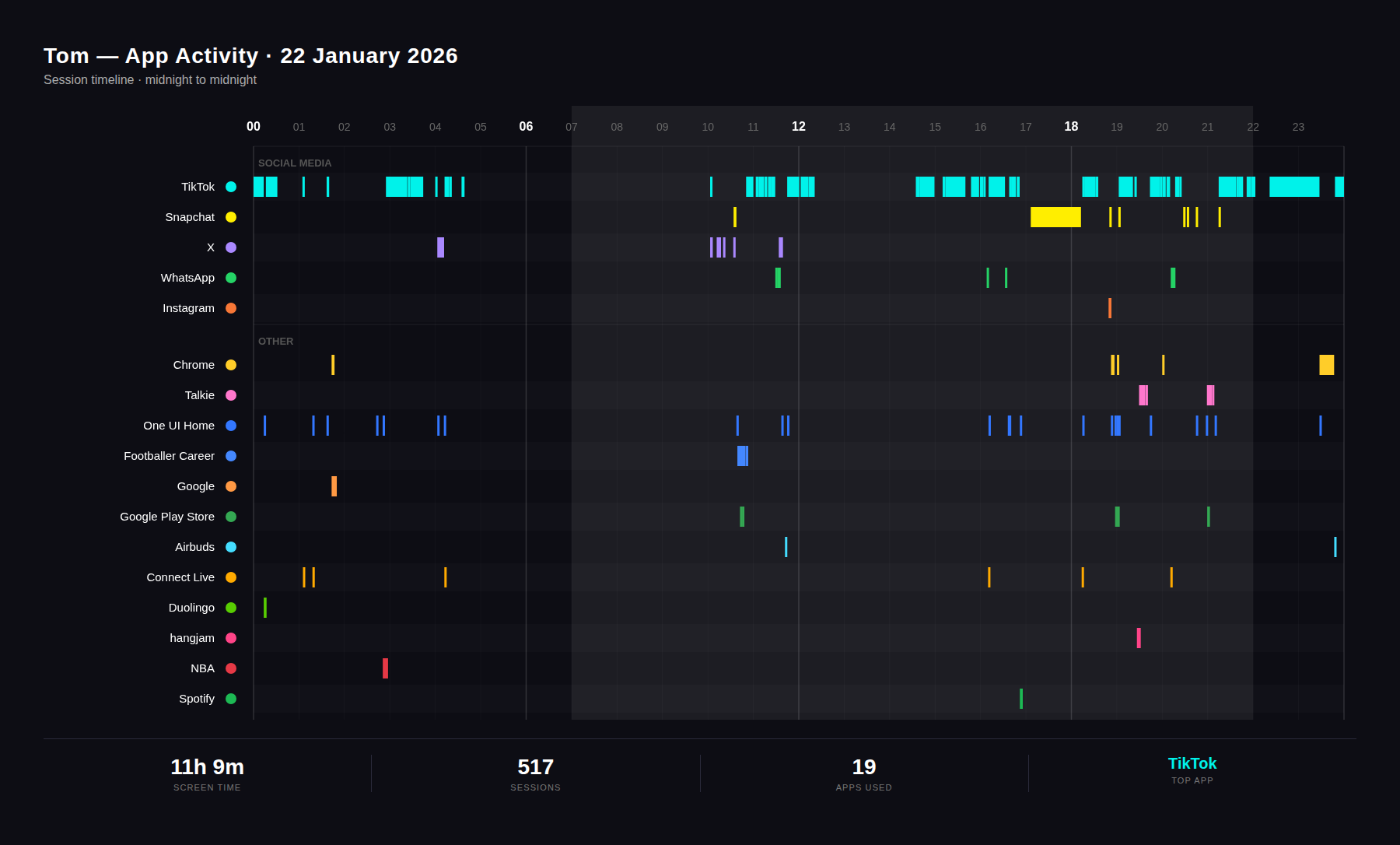
A typical pattern for a teenager is heavy use of TikTok interspersed with stretches of Snapchat, plus intermitted spells on other social apps like WhatsApp, Instagram, X. Other more functional apps like Google Chrome, Maps, and Spotify also appear.
The below is taken from Tom’s phone use on Thursday the 22nd of January 2026.
Most of the 21 children used TikTok alone for an average of over one and a half hours per day. Several averaged more than three hours per day.

Average time spent on TikTok per day (h) for the 21 children who used the ConnectLive research app. Average is based on approx. 3 weeks’ worth of ConnectLive phone usage data.
Analysis of when children use their phones revealed that many were scrolling during the night, impacting their sleep. TikTok was not the only app being used throughout the night, but it was the dominant one.
For example, the visual below shows a 24-hour period of phone usage for Joey, 14, on Thursday the 15th January 2026.
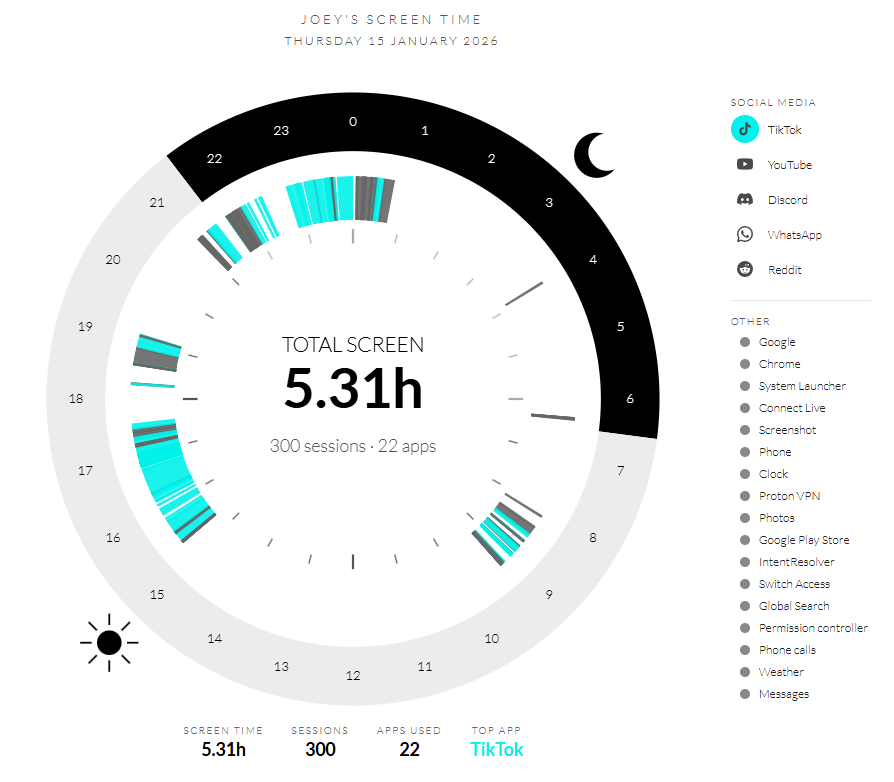
Analysis of when children use their phones revealed that many were scrolling during the night, impacting their sleep. TikTok was not the only app being used throughout the night, but it was the dominant one. The visual below shows a 24-hour period of phone usage for Joey, 14.
“Because instead of sleeping, sometimes I've just been like scrolling on TikTok. Like the more I scroll, the later it gets.”
Emma, 14
20 out of 21 children used TikTok during the night, between the hours of 10pm and 7am, as shown in the chart below.

Footnotes!
Additionally, 16 of these children were using their phone between 12am and 6am.
Across the sample, this ranged from a very small proportion (0% when rounded) of their total TikTok activity to nearly a quarter or more for two children.
DONUTS FOR THE HIGH LATE NIGHT USAGE
Most children said they often found it hard to stop scrolling.
“it's just once I'm on it [TikTok], I'm like in that world instead of a world of my own. It's just kind of… I'll watch one thing, then I want to watch another, then another, and it just keeps going on.”
Liam, 15
“it's a bit brainwashing, if you know what I mean. Because when, like, when you've been on it for so long, if you only want to go on it for 20 minutes or whatever, you could just scroll and then just forget, and then it's like 2 hours later.”
Noah, 14
Researcher: and what do you do when you’re on TikTok
Jasmine: “Just pretty much scrolling, yeah”
Researcher: and how do you feel when you’re scrolling
Jasmine: “It just feels very entertaining, and interactive, and a bit addictive, I feel like I’m on it every day just scrolling”
Jasmine, 15
Several children, unprompted by researchers, said they thought they were ‘addicted’ to scrolling TikTok.
INSERT ADDICTION UNPROMPTED VIDEO? as a full? or individual clips of the children?
CHARLIE VIDEO
TOM VIDEO - sleep bit + addiction unprompted
Several children said they think specific features of TikTok make it addictive.
Short form video:
“It’s the constant thing of swiping on a video and they are not long videos, they’re short videos.
So it’s a lot easier to watch [TikTok] than say to sit down and watch a 3 hour movie, whereas we could spend 3 hours watching TikTok but it doesn’t feel like that because we’re not watching one thing…
I’ve fallen victim to it many times I won’t lie, I’ll go on TiKTok and I’ll say oh I’ll only use it for 5 minutes and I’ll be on it for an hour or an hour and 30 or something”
Tom, 15
Infinite scroll:
“there's obviously like so much feed that's on there, so you just scroll through it all and don't realise how, how much time you're spending on it.”
Emma, 14
Algorithmic content selection:
“I guess the videos kind of are made for you. Some of them are. So it's just nice to scroll. Like, I wouldn't scroll on my mum’s TikTok because it's so, like, boring.”
Poppy, 16
Junk feed
Children say that meaningless content is ‘brainrot’ and that it makes them feel rubbish
Children are viewing hundreds, sometimes thousands of videos every day. Children in this study watched an average of between 359 and 1,021 videos per day in January 2026.
Average number of TikTok videos watched per day in January 2026
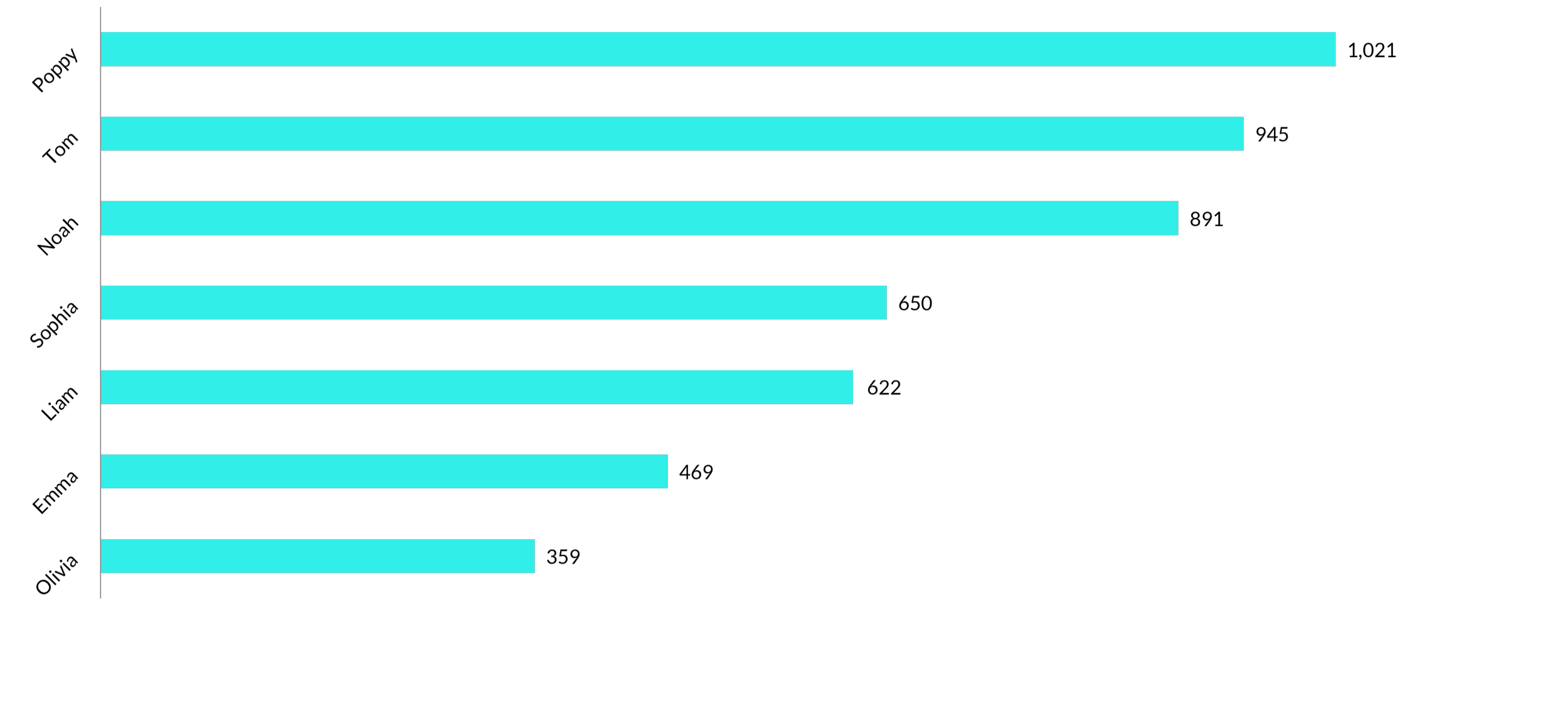
Average number of videos per day recorded in children’s TikTok watch history for the month of January 2026. Watch history is TikTok's own log of every video a user has viewed in the app, provided directly by children as part of data donation.
In January 2026 alone, all seven children saw more than 10,000 videos on TikTok, with Poppy seeing over 30,000 videos.
Number of TikTok videos watched in January 2026
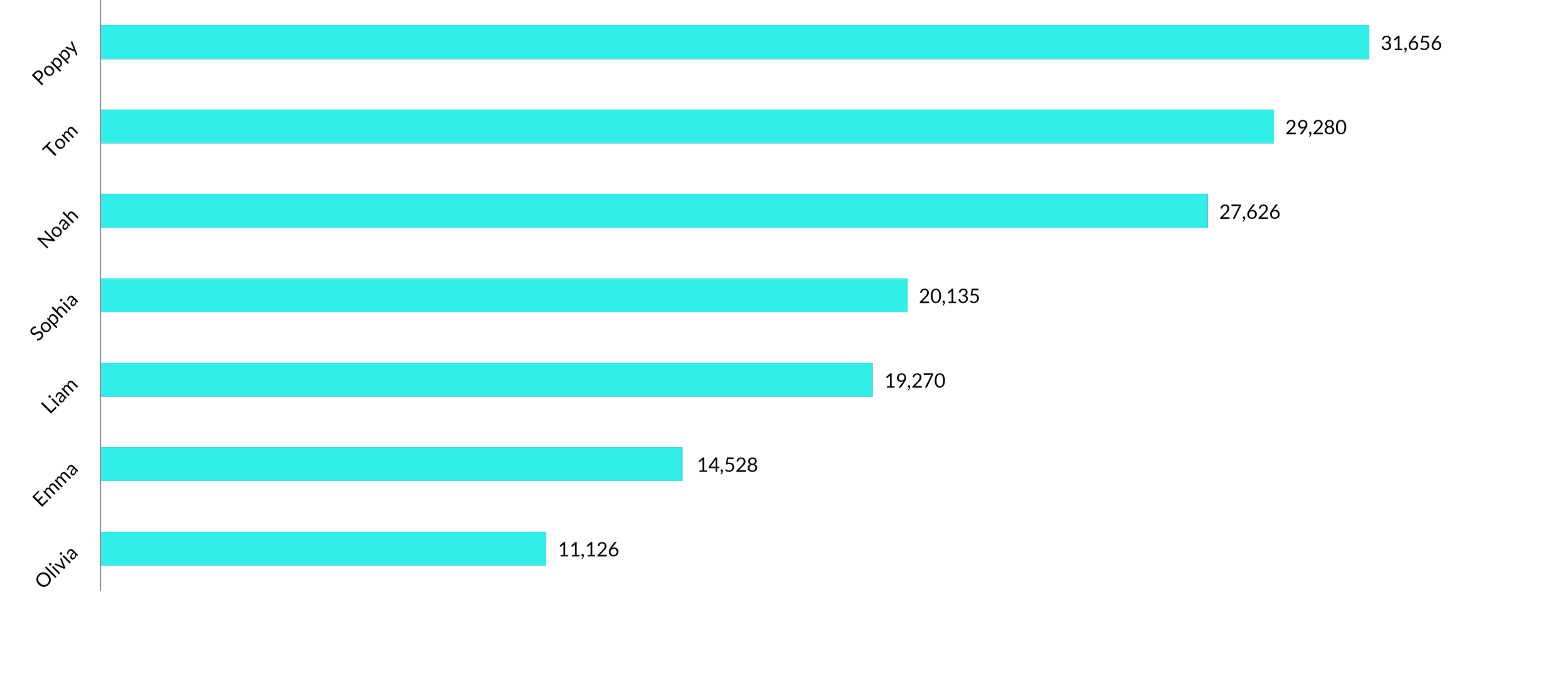
Total number of videos recorded in children’s TikTok watch history for the whole month of January 2026. Watch history is TikTok's own log of every video a user has viewed in the app, provided directly by children as part of data donation.
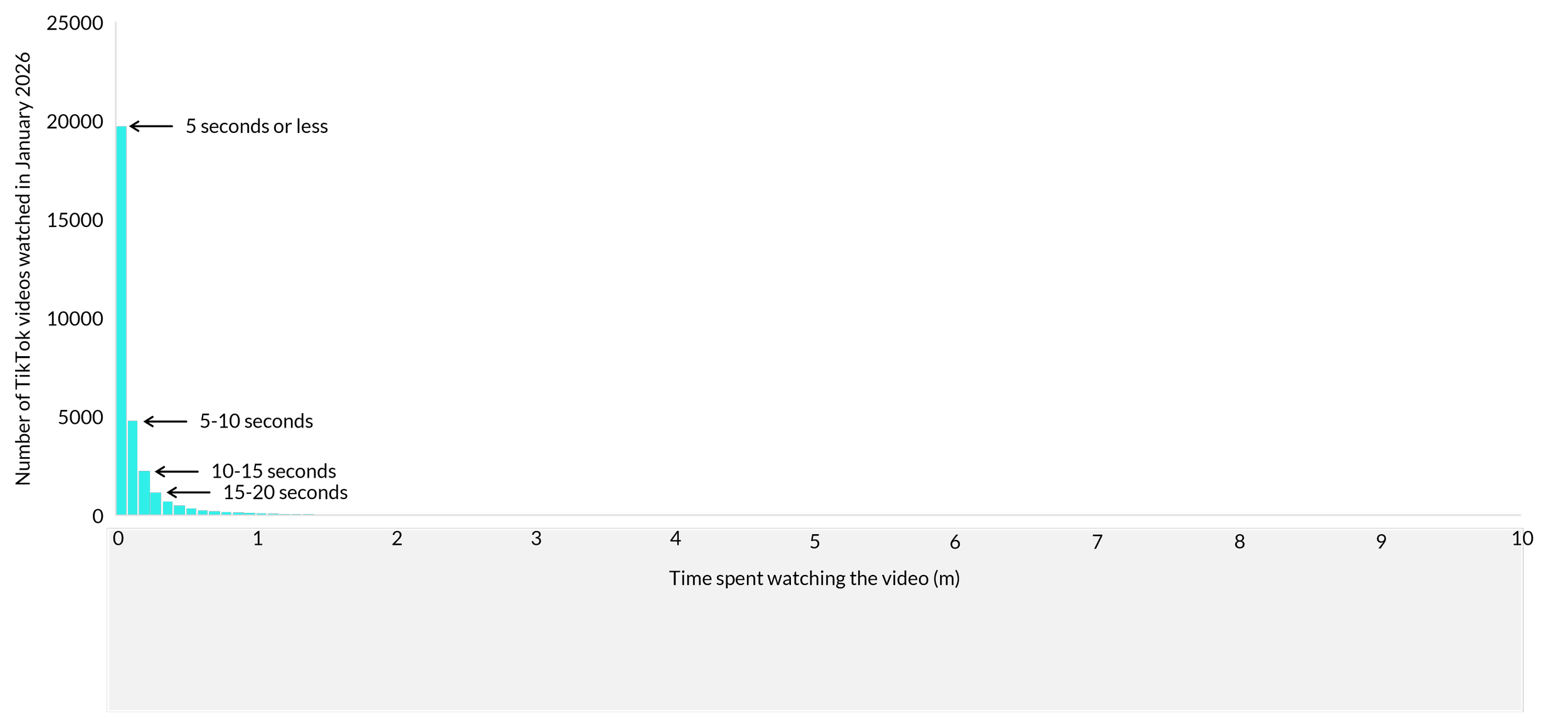
Most videos are watched for very short periods of time - less than 5 seconds.
For example, 19,519 of the 31,656 videos that Poppy saw in January 2026 were watched for 5 seconds or less.
Distribution of watch duration of videos Poppy saw in January 2026
“With TikTok, if you get bored, you just keep scrolling”
Poppy, 16
Distribution of watch duration per TikTok video for Poppy’s watch history for the month of January 2026. Watch history is TikTok's own log of every video a user has viewed in the app, provided directly by children as part of data donation. Watch duration was calculated as per the explainer below.
How video watch duration was calculated: Watch duration was calculated by working out the difference between the start times of videos watched in chronological order. Videos with a calculated watch time of over 60 minutes were excluded, as this exceeds the maximum length of any video on TikTok, suggesting these values reflect gaps in app usage, for instance where a child went off their phone or switched to a different app, rather than genuine viewing time. It is worth noting that this method of calculating watch time may still include some gaps in app usage as genuine watch times, meaning the actual proportion of videos watched for 5 seconds or less is likely higher than reported here.
This was similar for the other children, with 50% or more of the videos they watched in January 2026 being viewed for 5 seconds or less.
Proportion of videos watched for 5 seconds or less in January 2026

In screen recordings, you can observe children often skipping through videos at high speed. Sometimes they watch videos on double or even triple speed.
Videos form a stream of disconnected, contextless, remixed snippets.
Spend 30 seconds scrolling through different children’s TikTok feeds below to see what they see.
INSERT VIDEO OF SCROLLING THROUGH FEEDS (SCREENSHOT BELOW)
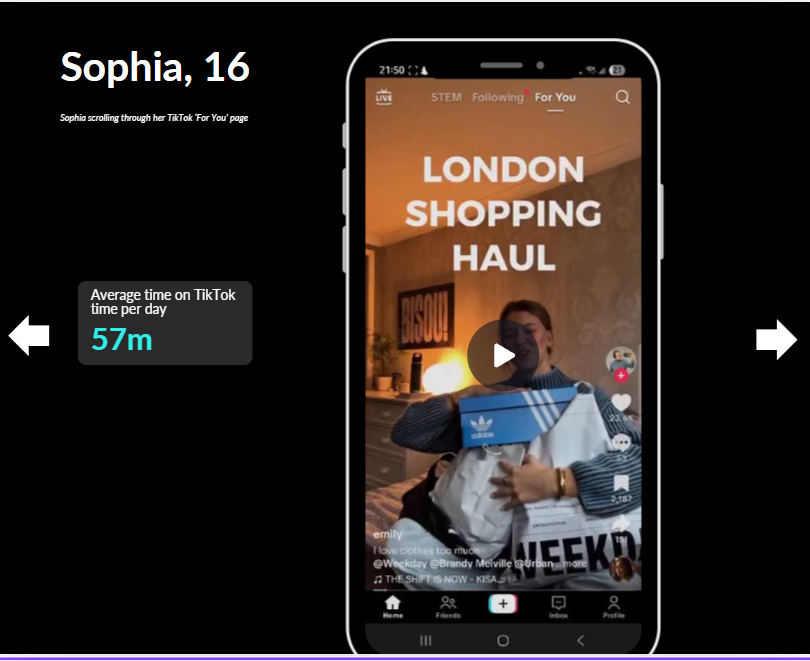
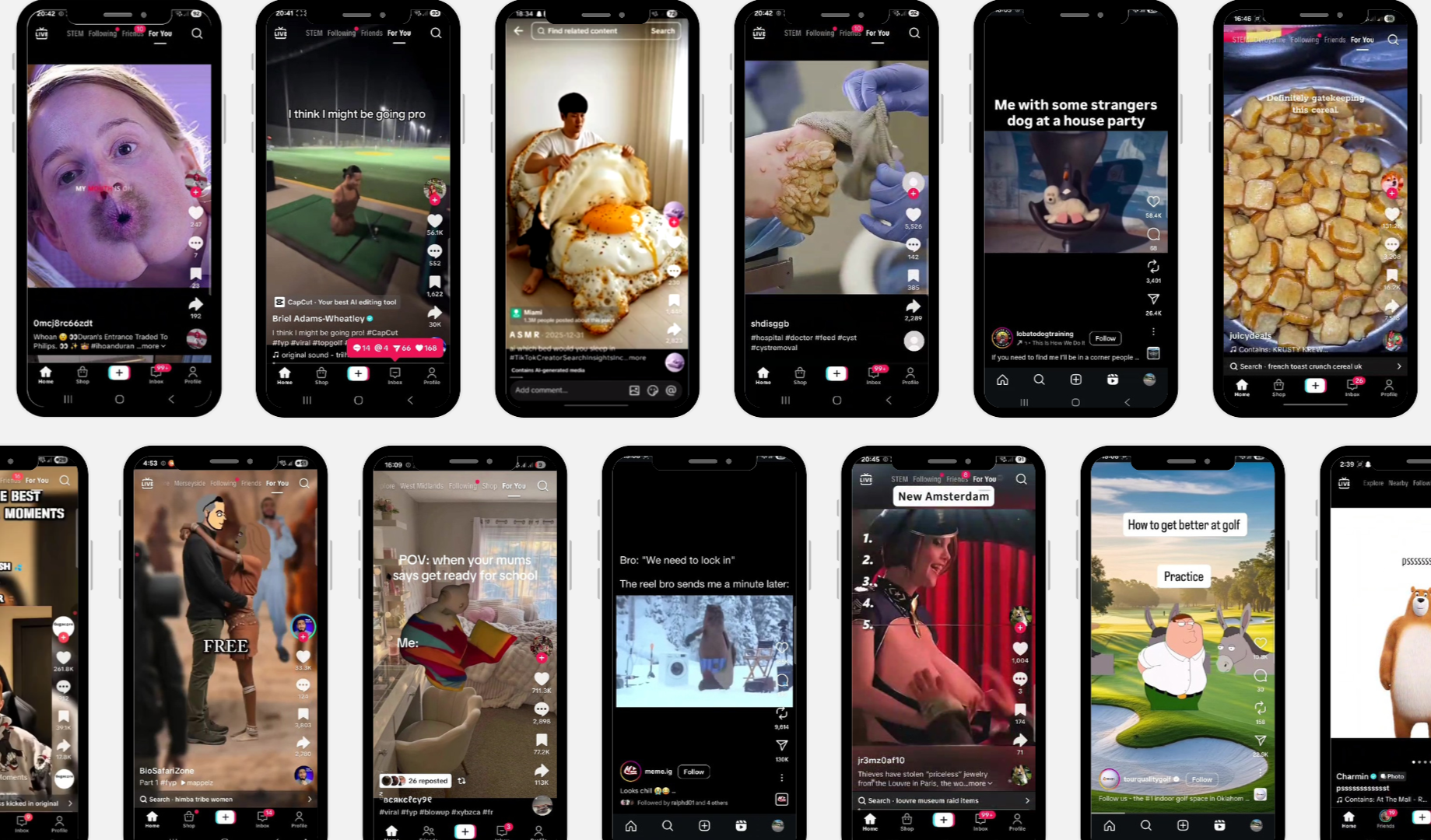
Children use the term ‘brainrot’ to describe particularly meaningless content.
“If you have brainrot it’s not a good thing, it shows that you watch a lot of slop… these like AI videos do absolutely nothing for you, they just don’t do anything at all… it’s absolutely useless and it’s often associated with being like a bit lazy or a bit dumb because you’re not watching anything good”
Rishi, 14“Really random brainrot posts, like these random meme photos and that just in an edit, like the Italian brainrot memes and that”
Emma, 14
Examples of so-called ‘brainrot’ content seen by the children in this study while scrolling through TikTok are shown in the images below:
Many say they feel tired, guilty or disappointed in themselves after ‘doom-scrolling’.
EMMA AUDIO WITH QUOTE APPEARING
“I just doom scroll on TikTok a lot” EMMA
Researcher: what is doom scrolling
“It’s basically when you’re bored and you just scroll through TikTok a lot. If im like lying on bed im just on TikTok scrolling through for no reason” EMMA
Researcher; how do you feel when you’re doom scrolling
“I feel quite lazy because it’s not really productive” EMMA
LIAM AUDIO WITH QUOTE
Researcher: Okay, and Friday, Saturday, Sunday, what do you like to get up to on the weekend?
Liam: Just chill.
Researcher: What's chilling involved for you? What do you do?
Liam: Sitting in bed and doom scrolling on my phone and going to sleep.
Researcher: Do you think– how do you find that? Like, do you feel chilled after that?
Liam: I feel chilled, but I also get really bored because I feel like I'm just wasting my time scrolling on my phone instead of actually doing something.
Researcher: Okay. Um, what's doom scrolling?
Liam: Basically, it's just scrolling on social media for hours, and like, you just forget there's a whole world around you. You just kind of focus on your phone and don't do anything else other than spend your day on social media, or a lot of your day.
Researcher: Okay, and how much time do you think you spend doing that on a weekend?
Liam: Total, probably like 12 hours, 13 hours. It's really bad.
Researcher: If you've had like a long session, you've been doom scrolling as you put it, how do you feel after that?.
Liam: Tired Or, um, disappointed in myself. I spent so much time on my phone instead of doing something productive.
Researcher: Why is that disappointing?
Liam: I just feel like the time I spent– sorry, I could have– the time I spent on my phone, I could have been riding my scooter or bike or doing homework, which would actually help me in the long run, I suppose.
Researcher: So why didn't you do those other things?
Liam: Because it's just so much easier to pick up your phone than having to bring yourself to do homework where you've actually got to work things out and write it down. It's a lot easier to scroll compared to writing with a pen and pencil.
Early data may suggest scrolling can depress children’s mood in the moment.
The ConnectLive app enable short surveys or measures to be triggered by certain patterns of app usage. For the pilot, children were asked to do a short wellbeing survey after either thirty minutes of scrolling on TikTok or thirty minutes of offline time.
Analysis of this data cross 21 children shows a small but consistent pattern: positive mood tends to decrease following TikTok sessions, while negative mood increases, compared with periods when participants were not using their phones. NOTE MORE DETAILS / LAYMAN EXPLAINER TO ADD HERE
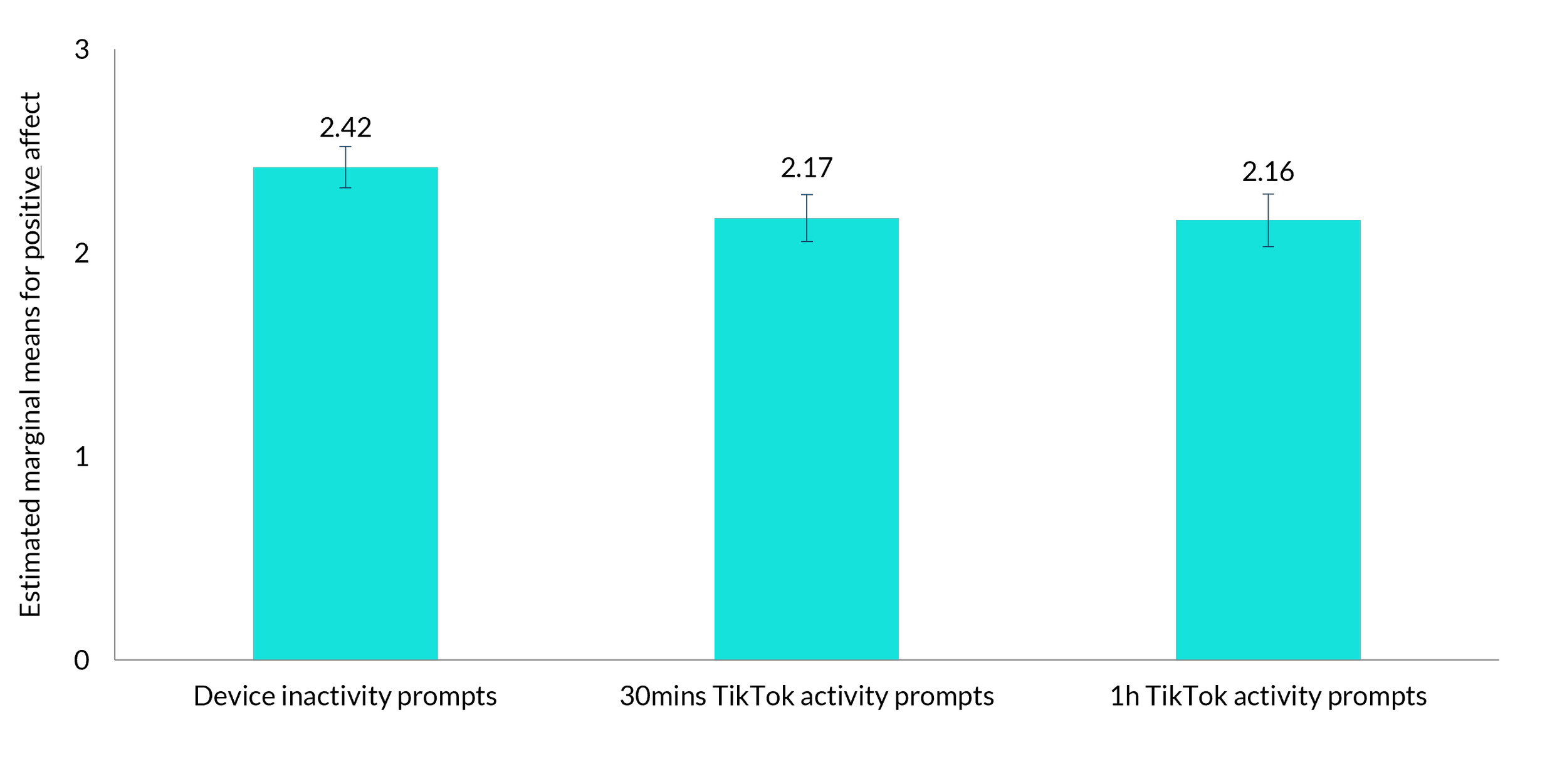
Estimated marginal means for positive affect (PANAS) from the Linear Mixed Model exploring mood by prompt type. Base for device inactivity n=48 prompts, base for 30mins TikTok activity n=29, base for 1hr TikTok activity n=16.
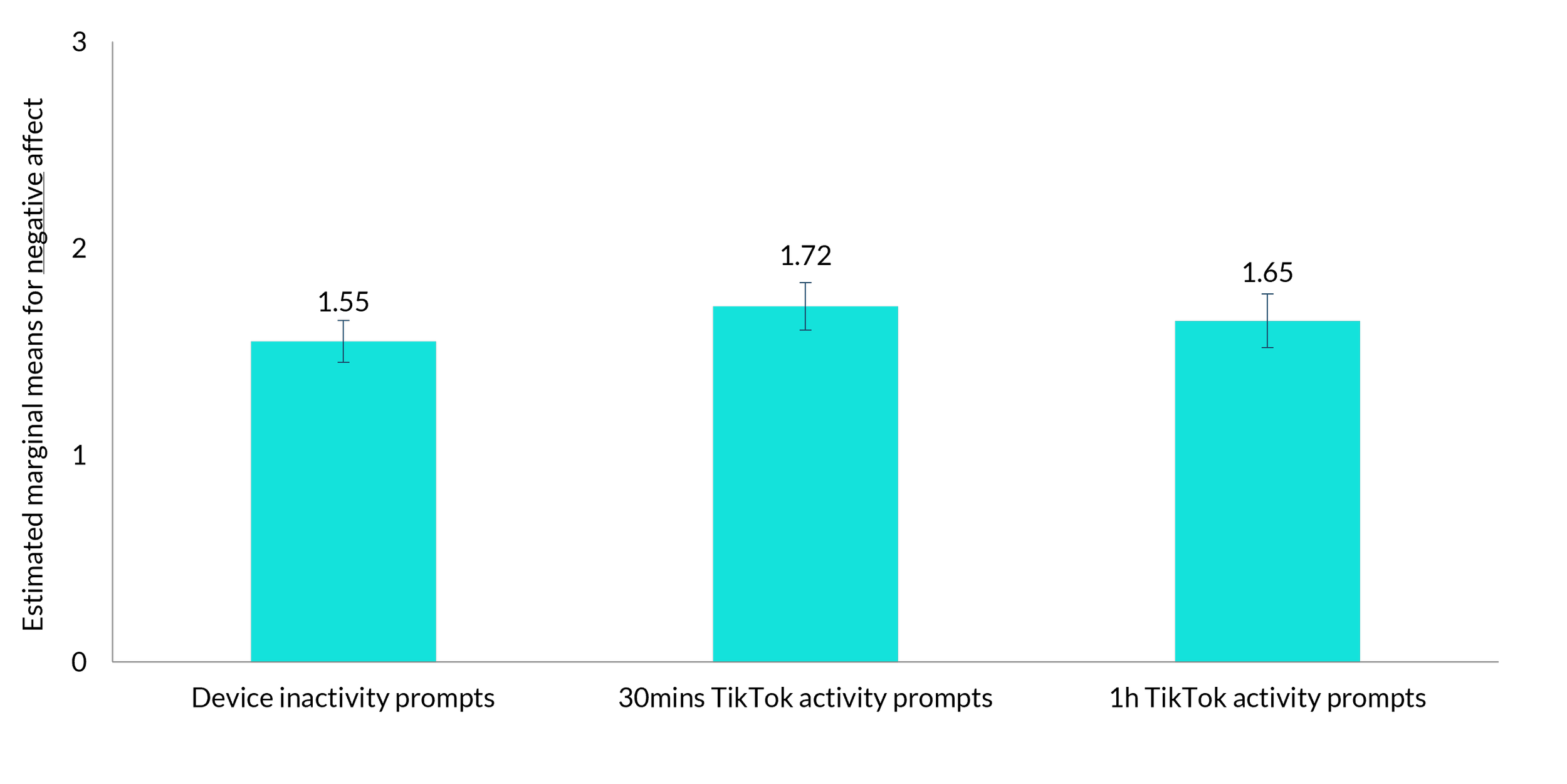
Estimated marginal means for negative affect (PANAS) from the Linear Mixed Model exploring mood by prompt type. Base for device inactivity n=48 prompts, base for 30mins TikTok activity n=29, base for 1hr TikTok activity n=16.
*This data should be interpreted cautiously due to the small sample size. Significance testing suggests a XX% chance that this finding could be a result of random chance, and the standard threshold for academic papers is XX%. Without further research it’s not yet possible to know if this is a reliable, repeatable finding or that it is linked specifically to TikTok use, or phone use generally.
Without pre and post measures, we also can’t be sure whether scrolling TikTok causes children to feel worse, or they feel drawn to TikTok when their mood is low.
Even so, the consistency of the pattern suggests it’s worth exploring further with larger-scale research that can clarify these questions.
Everything has a price
TikTok feeds are commercially driven, selling products and people
Among the seven children who shared TikTok data showing every video they had watched, adverts and commercial content made up a striking share of what they were shown.
In January 2026, the proportion of videos shown to children that were adverts - videos labelled by TikTok as a paid advertisement in which a brand directly paid TikTok to promote their content - ranged from 1 in every 25 videos for two children (4%) to as many as 1 in every 5 videos for another child (20%).
Proportion of videos shown that were paid adverts
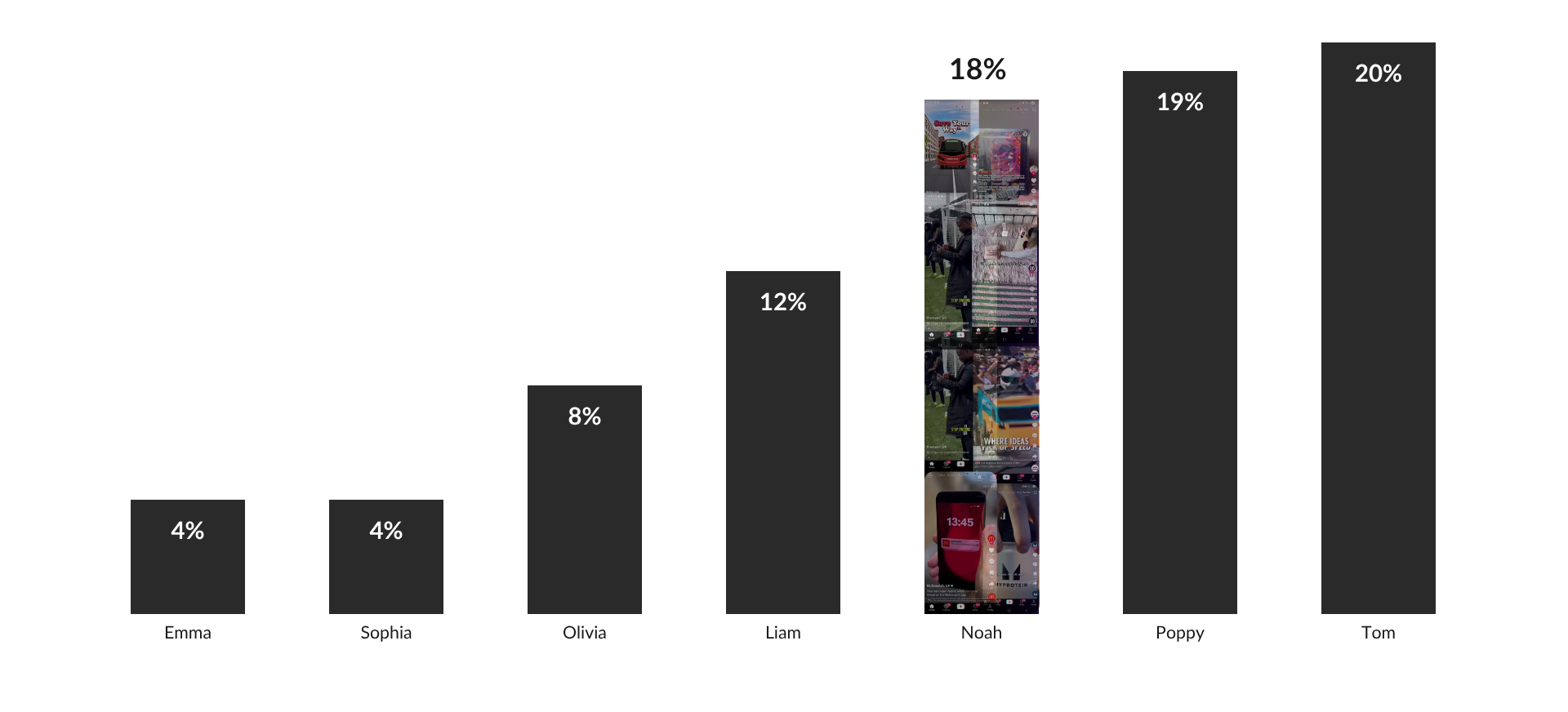
Proportion of videos shown to children during January 2026 on TikTok that contained meta-data showing they were an advert. Base size of videos ranged from n = (the total number of videos watched by each child, that were still available for analysis in May 2026 e.g. not removed or private accounts).
What we mean by "TikTok Ad": In this report, "TikTok Ad" refers exclusively to paid commercial advertisements. These are videos where a brand paid TikTok directly to boost the video's reach to a targeted audience.
The proportion of ‘commercial content’ that children see will be much higher, including a range of other types of content in which creators can monetise their content, show in the table below:
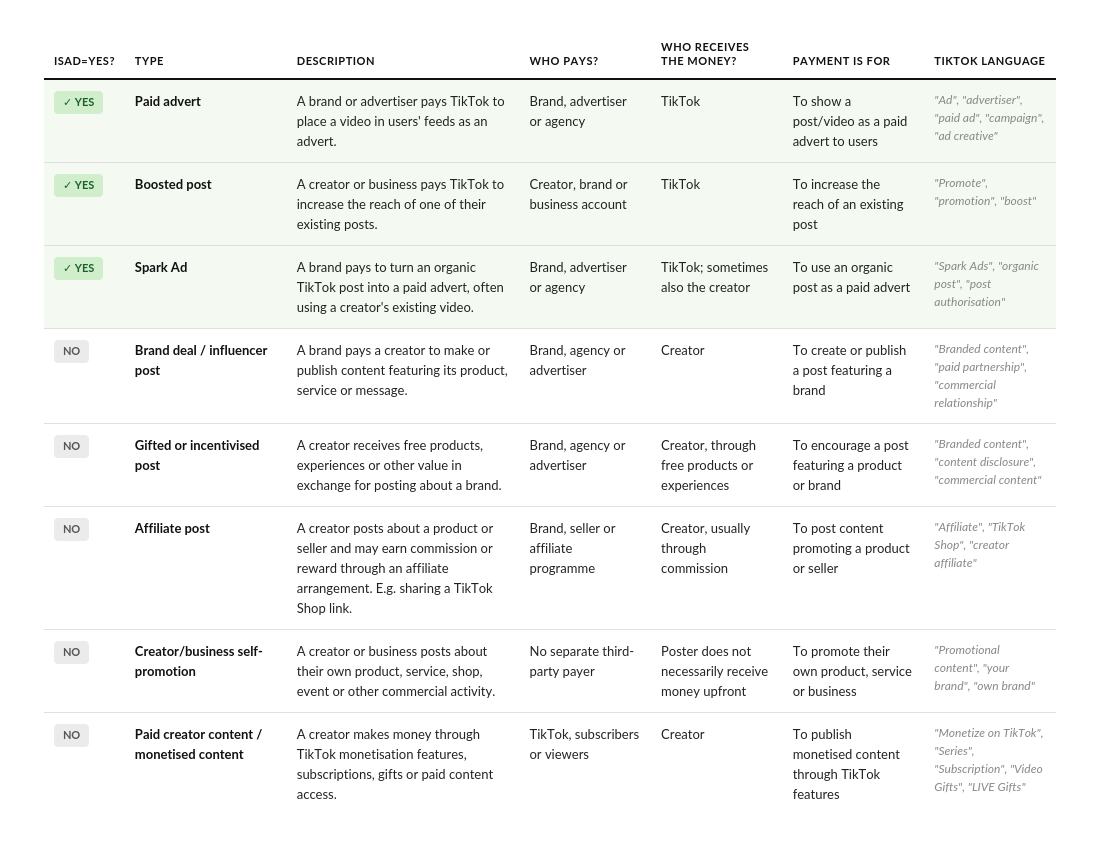
The graph below shows the proportion of commercial content children saw when some of these wider types of commercial content are included, such as:
Videos with links to TikTok’s shopping system
Videos with tappable product anchors
Videos with TikTok’s ‘Paid-partnership’ tag attached
INSERT UPDATED HCART
Not only is the high proportion of commercial content evident when systematically analysing the content shown to children on TikTok, but also in observing them scrolling through their feeds.
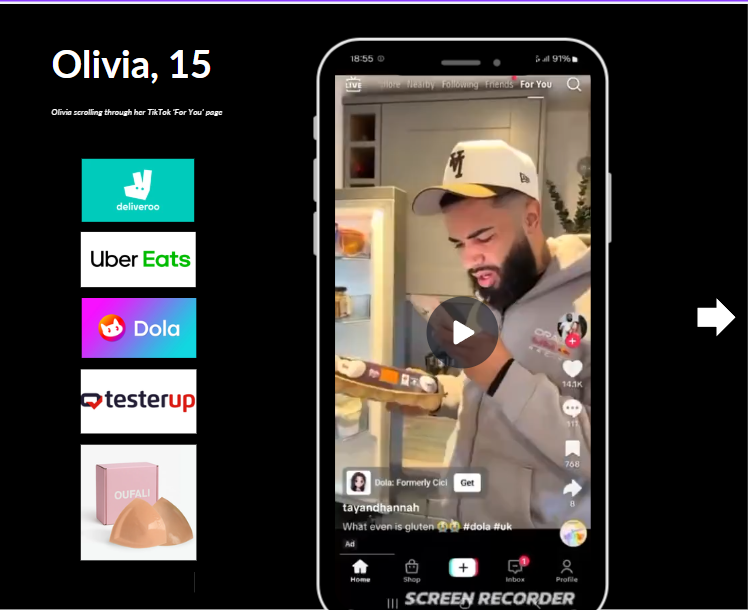
The clips below show 30 seconds of Olivia and Noah scrolling through their “For You” page, and the brand posts that appeared - from McDonald’s, to Deliveroo to Dola AI to Urban Outfitters.
BELOW TO BE VIDEOS
All three of the boys in the sample saw adverts for gambling and alcohol brands.
The videos below show some of these adverts - shown to Noah, Tom and Liam in January 2026.

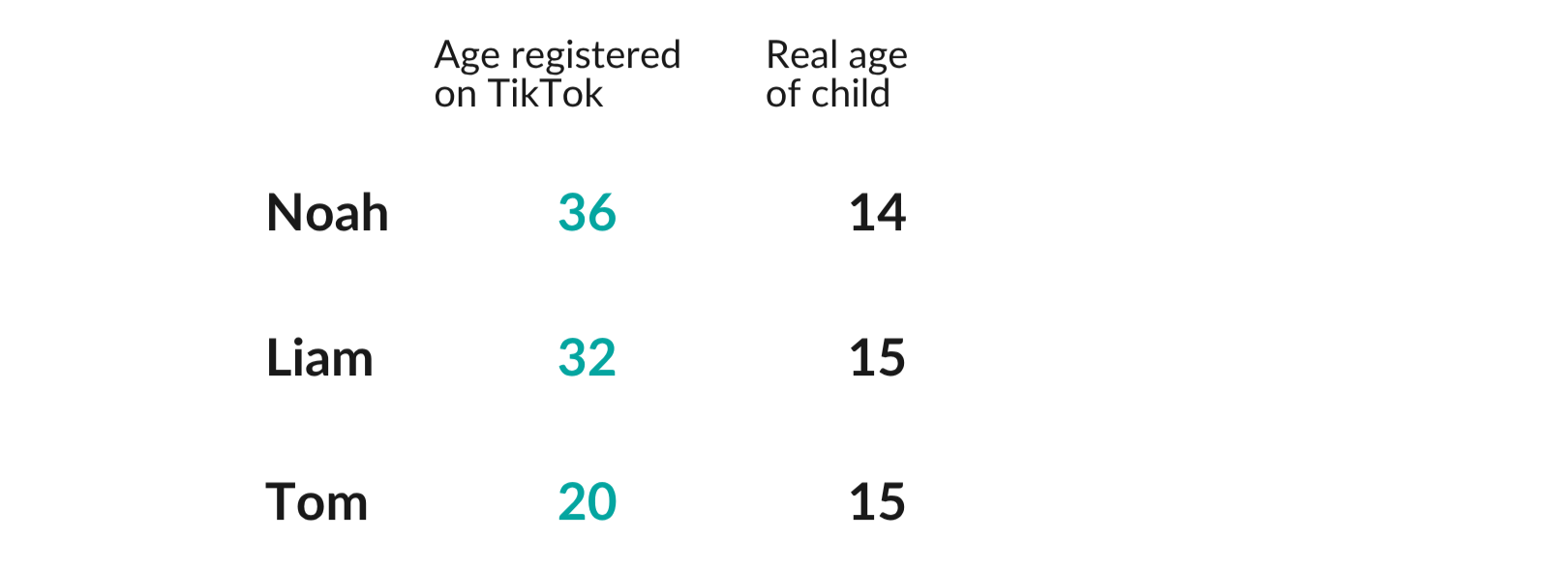
It is worth noting that all three children had TikTok accounts that were registered as over the age of 18.
In our wider work, we regularly see children using social media accounts registered with an age that is not their own. This means that the protections that social media platforms, such as TikTok, may put in place for children with regards to advertising, and wider content shown to users, are essentially void.
More than one child was shown sexualised content on TikTok, including posts from accounts that appeared to direct users towards adult sites or operate as OnlyFans funnel accounts. Some of these videos, shown to children in our sample, are shown below. VIDEO OF A FEW OF THE SEXUAL CONTENT - TAKE FROM GRID UPTOP
OnlyFans funnel accounts on TikTok: An OnlyFans funnel account is a TikTok account that appears to use TikTok to attract people towards paid adult content hosted elsewhere. The account may post suggestive but non-explicit videos that do not appear to break TikTok’s guidelines, in order to gain views, followers and engagement. It then directs users to another platform or subscription site where paid adult content is promoted or sold. This can happen through several steps: for example, the TikTok profile may link to an Instagram account, which then links to an OnlyFans page.
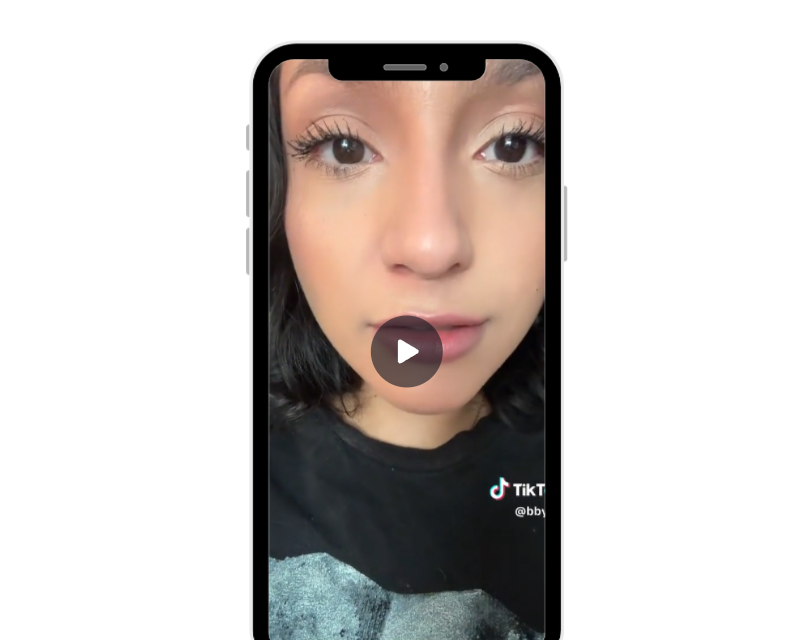
An example of one of these OnlyFans funnel accounts is shown below. This account appeared in the feed of one of the children in our research multiple times. Some of the videos the child was shown from this account are included below.
INSERT VIDEOS 3 OF THE ACCOUNT! WITH SOUND.

Most of what children saw on TikTok, whether advertising or not, appeared to be commercially driven.
Many videos appear to be spotlighting or promoting specific products, whether or not they’re explicitly tagged or presented as adverts.
And of those that don’t, nearly all still have signs that the content creator wants to grow their following, go ‘viral’ or replicate monetisable trends.
The value of TikTok
Children are not sure TikTok is worth the return on investment
Children see things they like on TikTok – that they find entertaining, funny, or interesting.
“Um, there's a big variety of things to watch. Like, I can easily go from watching things to do with scooter and
BMX, into football or darts… I've used it [TikTok] before to find the best temperatures and lengths to cook like chicken or 'How to cook bacon in the air fryer.' I've done that before, and actually they teach me how to do it”
Liam, 15ADD VIDEO CLIP / screenshots of the things he likes
“I usually use it [TikTok] for comedic relief if I'm bored, so I think most time it's quite joyous or entertaining.”
Olivia, 15“The AI fruit videos are funny but it also does help as well… like my mum bought some fruits today and it reminded me of one of the videos saying you shouldn’t wash it before you put it in the fridge because it goes out of date a bit faster”
Jasmine, 15ADD VIDEO CLIP OF THE FRUITS
Children say they use it to relieve boredom and to chill out.
“It's very like easy if you're bored, you just go on that [TikTok] and you're not really bored anymore because it's obviously — entertainment.”
Charlie, 14
“I mainly use TikTok for, well, Just entertainment, or when I'm bored and I've got nothing else to do”
Tom, 15
“I feel like it feels like, you know, when you're like bored and you don't know what to do, it just like fills that gap of time”
Emma, 14
There’s social currency attached to sharing good videos with your friends, and keeping up with trends.
“When you’re sitting in bed and you just want to scroll on TikTok and then send your friends videos – that's when I use it. Or like at night, you're scrolling in bed, you can be like messaging friends at the same time and then go on to TikTok and send them like videos. But yeah, that's what most people do, my friends do… it's kind of like how I'd say me and like people I know relax, like some people are different but we all just want to sit in bed watching TikTok. Like, that's relaxing because it's like entertainment and then chilling.”
Poppy, 16
“Certain mutuals [mutual friends] I have, like I may not necessarily speak to you on Snapchat, but it's sometimes nice to just talk on TikTok every once in a while, and then like just like connecting each other, whether it's like making jokes or memes or videos.”
Olivia, 16
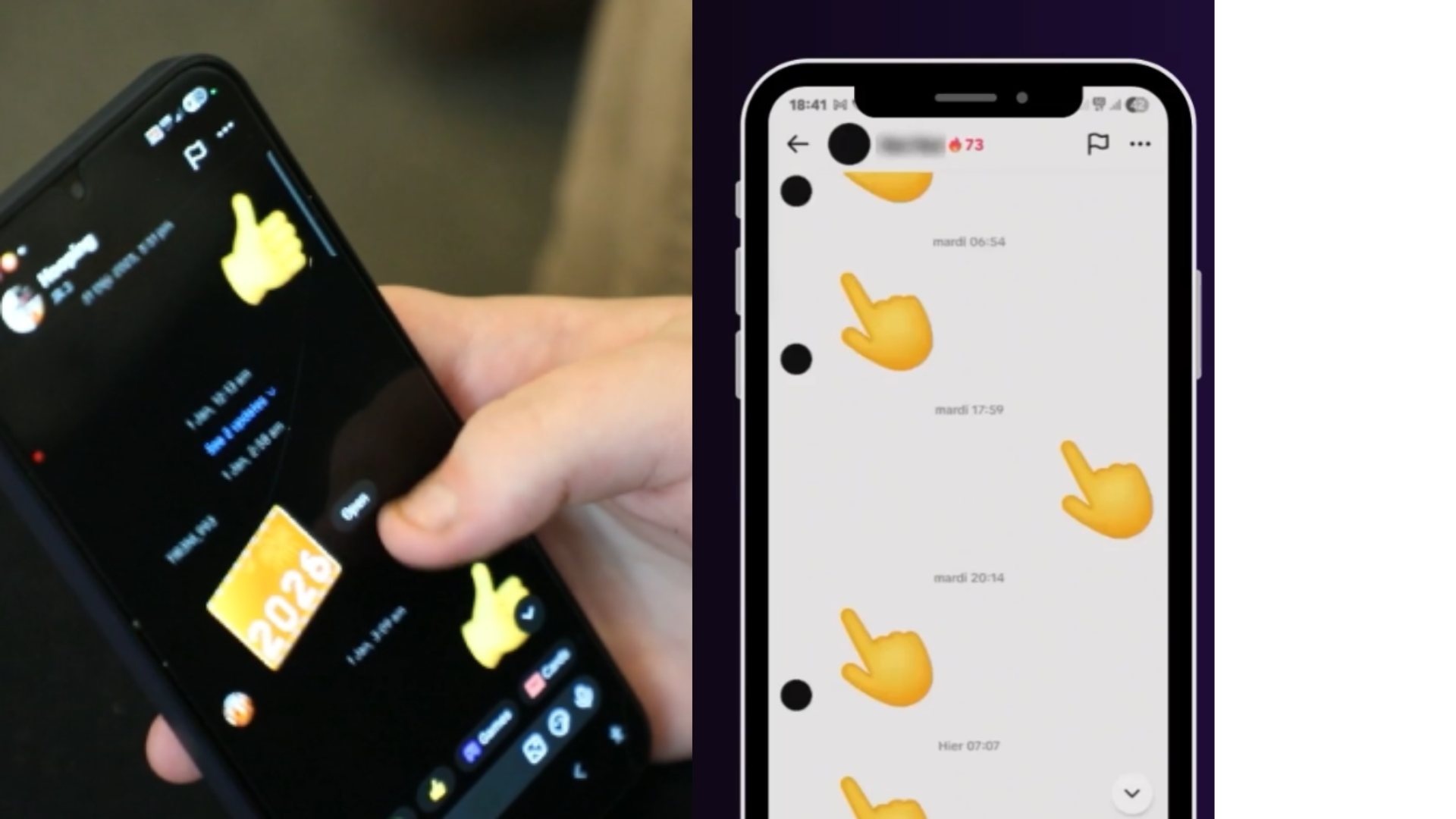
Some children do use TikTok to speak to their friends, but this often accounts for only a very small proportion of the hours they spend on the platform. When conversations do happen, they tend to be fairly surface-level. A few children, for example, talked about using TikTok’s “streaks” function, which encourages users to send a message every day in order to maintain or build their streak.
But most children wish they spent less time on it, and when asked how they would feel if they did not have access to the platform, some say that they think it might be a good thing.
Researcher: and how do you feel when you’ve finished using TikTok?
“I feel a bit relieved because I am doing something else other than just scrolling on my phone for very long”
Jasmine, 15
Researcher: And is there anything else you would rather be doing instead of scrolling on TikTok?
“To be fair, I'd rather, like, hang out with my friends. But obviously when you get back from school, you don't really want to go out. Everyone just kind of wants to sit in bed, so that's why everyone messages each other. So maybe hang out with them or, like go out.”
Poppy, 16
Researcher: What do you think you would do if TikTok was banned?
“I think I'd get on with my life and live, to be fair. I think it do a lot of people good in a way.”
Tom, 15
“I don't want to look back on my life in like 10 years and not be able to remember much because I spent that much of it on my phone. Yeah, I do want to like live more, like actually go out, but yeah, it's hard.”
Sophia, 16
Conclusion
TikTok is the focus of this report, but the questions this raises are not only questions about TikTok.
They are questions about a wider model of childhood online: one increasingly shaped by endless feeds, algorithms, short-form content, and platforms designed to capture and hold attention for as long as possible.
Children are consuming this kind of content at extraordinary scale: hours a day, thousands of videos a week, often late into the night. Yet unlike almost every other product or environment that may affect children’s health and wellbeing, there is still little shared understanding of what healthy use looks like. No meaningful recommended limits. No clear public account of what children gain from this time, what they may be missing instead, or whether the value they receive is proportionate to the time, attention and emotional energy they give.
This raises urgent questions not just about online safety, but about what we want childhood to look like in an age of algorithmic feeds.
What real value do algorithmic feeds of short-form content provide to children?
Is that value proportionate to the amount of time children spend on them?
Who benefits most from children’s time and attention: the child, the platform, advertisers, creators, or others?
What, if anything, are children getting from these spaces that they may not be getting elsewhere?
What might they be missing while spending hours on these platforms?
What is children’s time, attention and energy being exchanged for?
How much time scrolling is healthy for a child?
If we had a “recommended daily allowance” for short-form content, what would it be — and who should decide?
Methodology annex: 4 ways to look at children’s lives on TikTok
A handful of platforms are shaping the lives of a generation of children. Most of what we see cited in this debate is based – at best – on self report survey data or – at worst – on assumptions or TikTok’s own PR.
TikTok is one of the most used apps by children, and one that probably accounts for the largest amount of their time. We’re often shocked at the lack of curiosity and knowledge of how children actually use apps like TikTok. There are myths and assumptions that get continually raised, but these don’t hold up the moment you actually examine children’s use of it.
We spend a lot of our time looking at it. Some of the ways we study TikTok (or any social media app) are on the technical side. We’ve developed bespoke research tools like ConnectLive, developed in partnership with 5Rights, that enable us to gather granular usage data of every minute that a child spends on each app on their phone. It also can be used to prompt short surveys so we can measure the impact of a scroll session on things like wellbeing or cognitive performance.
But a lot of what we do is not beyond the reach of any researcher, policy-maker, or even curious parent.
Data donation is available to every TikTok user - simply request your own data (or ask a child to request theirs) and, under GDPR, the platform has to provide you with it (this is true of all social media platforms). This tells you every single video that has been watched and for how many milliseconds. You can usually request this data going back as early as when you first signed up to the platform. You can analyse what proportion were adverts, and what consistent themes crop up in the feed.
Screen record is a tool we’ve used for over ten years to study what social media actually looks like through the eyes of a child. Simply ask a child to flick on their phone’s in-built screen recorder while they’re scrolling TikTok (or, again, any other platform). Obviously, you need consent, obviously, you need to handle that data incredibly carefully, and obviously, children may subtly alter their behaviour knowing that you’ll see (we see lots of kids skip past videos with more adult themes extra quickly, for example). But in our experience, there is nothing as impactful to how people think about kids' social media use than forcing them to sit through 5 minutes of your average child’s TikTok feed.
Our final recommended method for understanding how kids use social media is just to ask them. You’ll probably hear kids saying they like TikTok, and that they see “funny” or “interesting” videos. But keep asking questions and you’ll build up a much more nuanced picture. Many children we meet have, at the very least, a conflicted relationship with TikTok.