

The digital umbilical
Technology gives parents more ways than ever to stay connected to their children, and more ways to put off the discomfort of not knowing where they are or what they're doing. What does the constant sharing of data do to parenting norms and expectations? And how does it shape the development of children's independence, resilience, and trust?
Our research for the Information Commissioner's Office explored how data sharing is shaping parenting and childhood.
24/08/26
“There's what is being referred to amongst teachers as like a digital umbilical cord
…parents are not able to not be in contact with their child for more than an hour.
And they get really furious with the school when we take their phone off them because they're like, well, how am I going to contact them?”
This quote comes from a secondary school teacher at a mainstream school in Scotland. We interviewed her as part of our ongoing research for the Information Commissioner’s Office about how children are growing up in a digital, and data driven, world.
The ICO published two reports from Revealing Reality last week. The first is our third wave of longitudinal tracking – Children’s Data Lives. The second is Navigating Children’s Privacy, the first in an ongoing series of projects exploring the tensions and pressures facing those tasked with raising and guiding those children – parents, caregivers, teachers, frontliner workers.
Between the two projects, these reports provide the greatest depth of insight into how data is shaping children’s lives and how rapid technological and cultural change is altering how young people are growing up.
Parenting in a data driven world
Most adults reading this can remember a version of childhood where your parents simply didn't see what you were doing for large stretches of the day. They heard very little about the 9am to 3.30pm school day, barring what they could prise out of you over dinner, a parents' evening once a term, or the dreaded note sent home. A weekend at your friend's house with no updates, or afternoons at the park.
Many people remember the first time they were allowed to walk to the shop, alone. Those first steps of freedom were usually built slowly, incrementally – children pushing at a boundary, parents gradually granting more freedom as trust was earned. Parents of that generation will tell you: it wasn’t that they didn’t worry when they faced these milestones, they gradually got used to it.
Now, teachers are using the phrase ‘digital umbilical’ to describe how some parents want to be connected to their children at all times.
One teacher reported that some parents expect hourly updates from a school trip:
“We went last week on a residential and we had all kinds of issues because we took loads of pictures and whatever we did wasn't good enough for the parents…
We had to put a message out saying ‘we will post pictures when the children have gone to bed’. You have to give them that information, because if we hadn't had posted that, we would have had 'Where are the pictures?' There’d be panic”
Another expressed their frustration with parents using AirTags to monitor their children’s location, even during the school day:
“We’ve had two instances very recently of one child in school and one on a school visit and I’ve said, ‘Oh, what’s that in your pocket?’ [And they respond] ‘It’s my GPS tracker. My dad worries about where I am’. It’s like, you’re on a school visit…
But now the boy is worried like, if my dad is worried, I had better be worried’. You’re going to a bloody museum.
And then another boy was just sat in his Maths class, and it fell out of his pocket. ‘Oh it’s me tracker so me dad knows where I am’. It’s like, you’re in a year 3 Maths lesson, what is your dad going to do with that information?”
Three years of research has given us the chance to see this from different angles
Across three years of our Children's Data Lives research, we’ve explored different aspects of children’s data lives.
In year one, we looked closely at location tracking.
Apps like Life360 and Find My Friends had become so routine that most parents in our sample didn't experience them as a decision at all. For some children, location sharing was an explicit condition attached to freedom: you can go out, if I can see exactly where. One father said:
"He just knew from day one, if you get a phone then there's rules, you need to have a tracker in it, charged and location on, or you can't go out."
For many this doesn’t appear to have an obvious end point. Parents aren’t thinking ‘when will I turn this off’ – but ‘why would I, ever?’ In our newest research, a mother told us that friends of hers still track their children at 20 and 25, "just for their own sanity, to say the kids are safe."
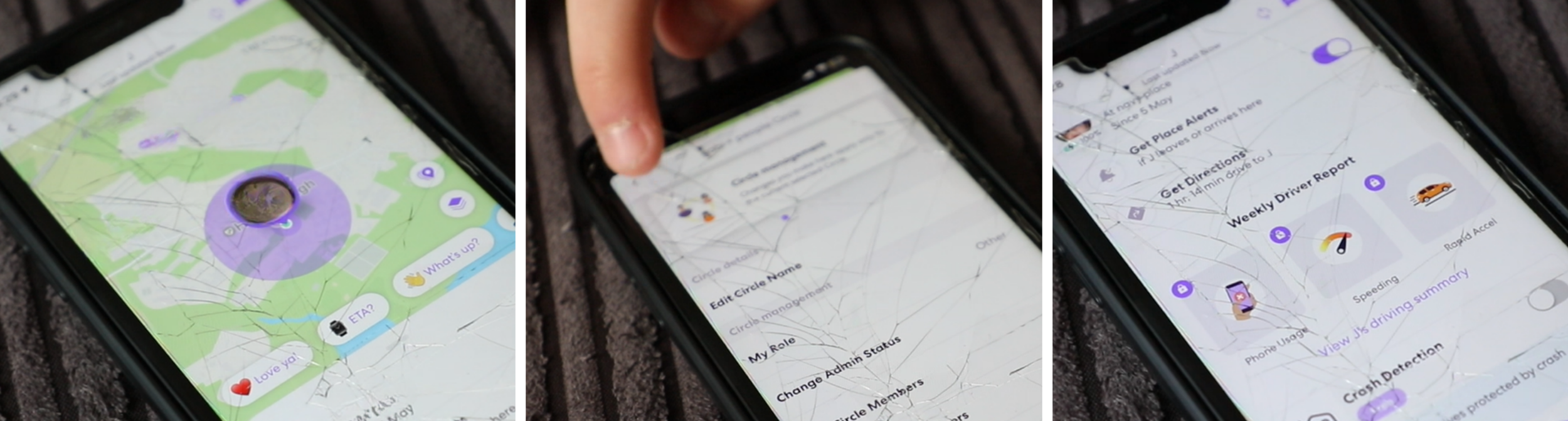
In year two, we did a deep dive into smart home technology.
We saw that while it might not have been the motive for buying these devices, they often found uses as parenting tools. Ring Doorbells bought for security, used to check when each family member really got home. Smart speakers, bought for music and shopping lists, became intercoms: a way to check in on children, without being in the room. A mum of a 9 and 11-year-old said:
“I’ve got a camera especially for the kitchen…they’re getting to that age, I can pop out [for] shopping, they don’t want to come. [I’ll] be like, okay, you can stay but just make sure you keep the camera and the Home Pods on”.
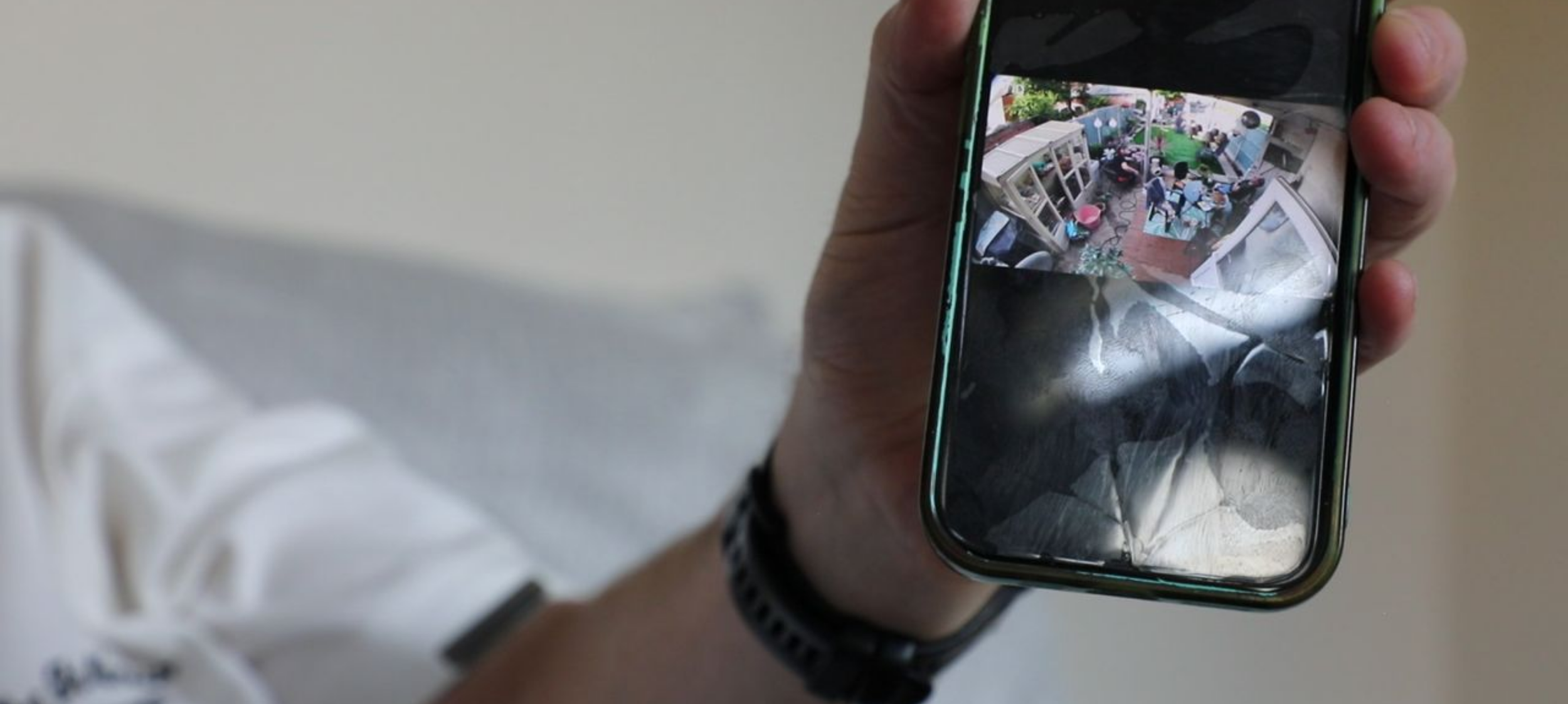
In our research published last week, we’ve learned more about the role of data sharing technology in schools.
Attendance, behaviour points, homework, schedules, exam results, even what a child bought for lunch: all now sent to a parent's phone, often in real time. One mother told us she watches her daughter's lunch spending closely to work out if she should be worried:
"I'd like her to buy more and actually look like she's eaten more, because from when I look at it, I'm like, she's really not eating a lot."
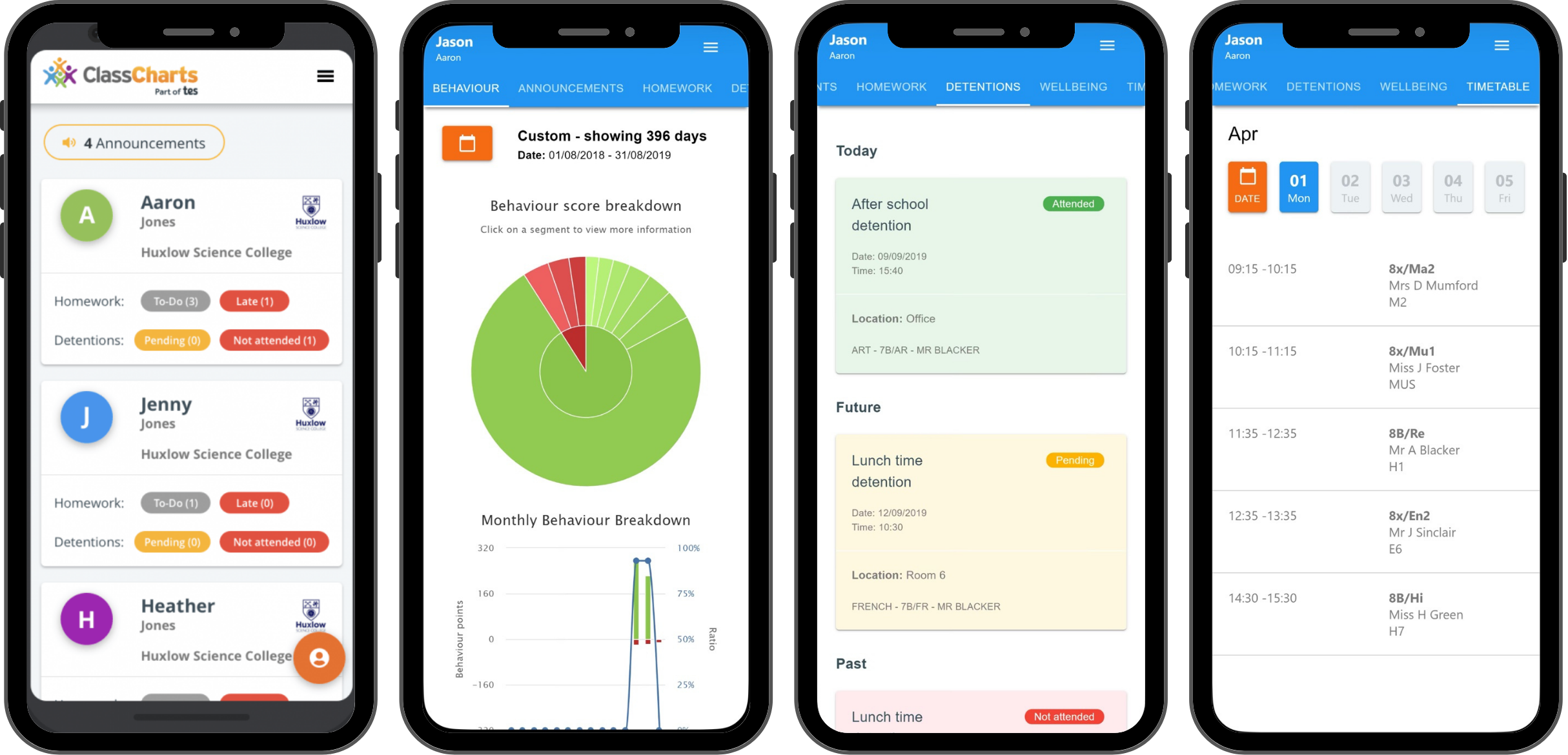
Screenshots from Class Charts, a popular school-to-parent app
Some parents worry about how all this data has changed them
Most parents we spoke to talked about the practical benefits of these technologies – useful knowledge, help with logistics – and also the emotional side – reassurance, comfort, a sense of connection with children.
A few though were questioning whether there might also be downsides.
One mother, with a background in psychology and play-work, hadn't yet given her ten-year-old a phone, but was weighing up what she felt might be an inevitable outcome if she did:
“The temptation would be to want to [location track] if my son did have a phone.
If he was out with his friends, I would be quite tempted then to just kind of online track him, which… I suppose part of me thinks that's a safety thing, but also I'm aware that that's probably not the most healthy approach”
“Part of me really, really wants to be able to kind of let them go, to go out and be free and just to kind of learn things, like learn these skills themselves.
But then I suppose partly maybe because the way that I've got used to things to an extent, I'm also aware that I feel very nervous about that.”
Another mother compared her own teenage years, drinking cheap cider in the park and telling her mum she'd been "in the park" when she'd actually been miles away on her bike, to her daughter's safe, tracked adolescence. She said she'd advise other parents to delete Find My Friends but "I wouldn't be able to do it myself."
The market for anxiety
It’s perfectly understandable to want to know your child is safe. But until relatively recently, parents had to gradually get used to the pang of anxiety that came with not knowing.
Now, thanks to an abundance of new tech products, they don’t have to go through that. Every time worry creeps in, a new product is there offering you data, surveillance, visibility.
When you examine the marketing of these products – it’s clearly a deliberate choice to appeal to parental anxiety for their children’s safety. Location tracking apps say that “Because we offer such a comprehensive range of safety features, families can feel free of daily worry”. Nursery apps promise to “make morning goodbyes easier” because “being away from your child is hard. Get photos, videos, updates, and alerts about your child’s day, wherever you are.”. In-home security cameras allow you to “See more. Know more. Protect more”, including by enabling AI-detection of your family member’s faces, so you get a notification whenever your camera spots them.
When do we cut the digital umbilical?
What once seemed extreme now seems normal. Now, the choice to not location track your child is seen by many as somewhat radical, maybe even negligent. And why turn it off, even when your children are grown up? You never stop worrying about them.
But as technology changes, so do the means for monitoring. Baby monitors were once a scratchy audio alert to your baby crying. Now they come with multi-camera angle HD footage beamed live to your phone. Some come with sensors to tell you your baby is still breathing, that their heart is still beating. We put microchips in our pets, is it such a leap that we might one day do that with children, if the manufacturer promises it will keep them ‘safer’?
We don't yet know what impact this cultural change will have on children. Developmental psychologists talk about the importance of unsupervised play and everyday small risks for building independence and judgement that can only be learned by making decisions when no one is watching. Delaying this, or avoiding it altogether, might be a comfort for parents, but ultimately a disservice to children. In the end we all need to grow up.