
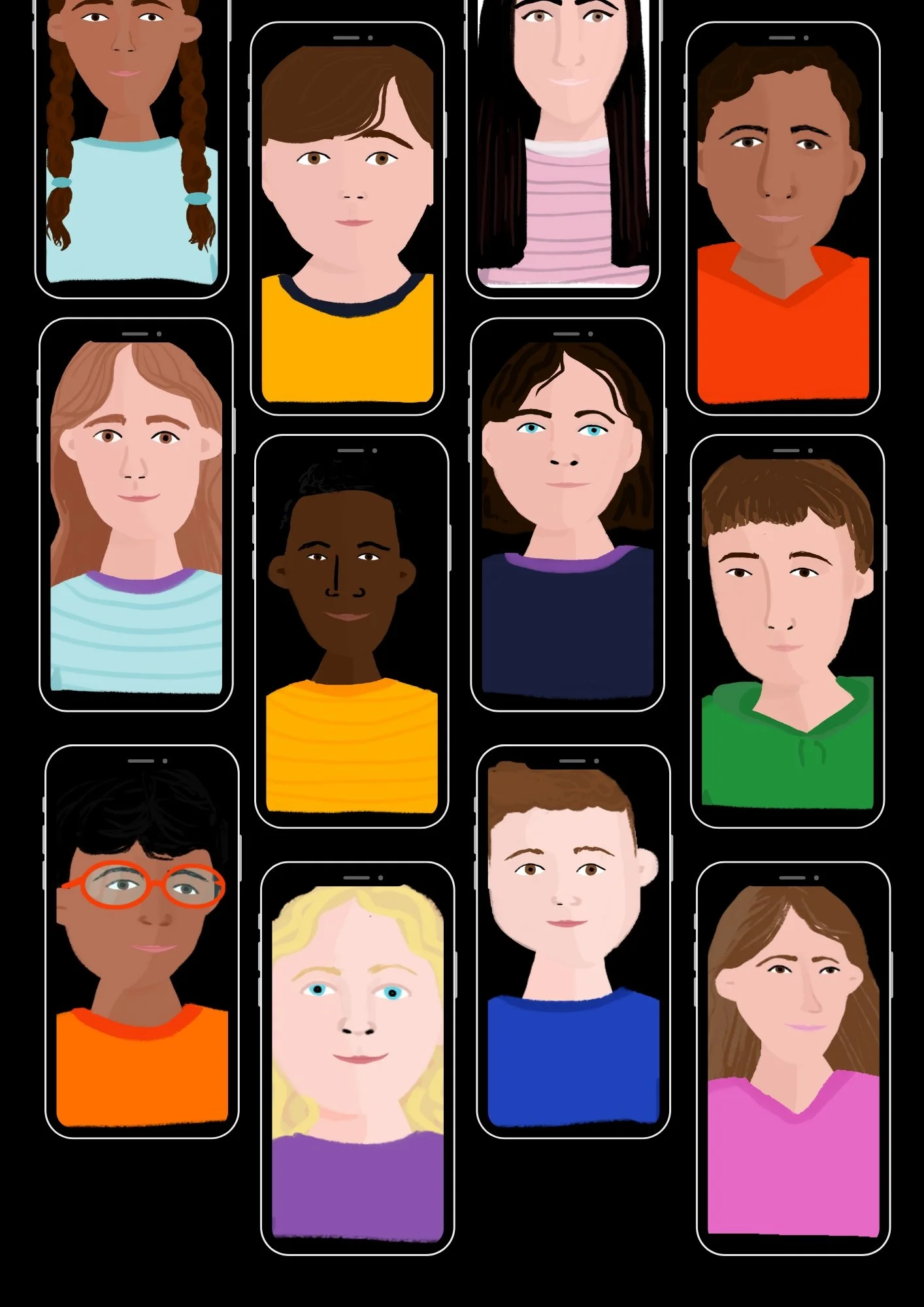
Over a decade of Children’s Media Lives
07/05/25
Introducing Wave 11
The eleventh year of Children’s Media Lives brings a continuation of longstanding trends as well as the emergence of new media behaviours among the children who take part, year on year, in this research. Last year we marked a decade of the project by reporting on the dominance of TikTok in children’s media consumption, the continued drift towards social media being less social and more commercial, the increasingly stimulating and sensory nature of online video media, and the challenges children face in navigating truth, trust and influence in the online world.
Wave 11 sees these trends continue and evolve, with the impact of algorithms, generative AI and ‘Brain Rot’ shaping children’s media lives.
The blurring boundaries between the online and offline
Remember “going online”? It's been a while since there was a clear line between the digital and physical worlds children inhabit; in the early years of Children’s Media Lives, there were more children using a desktop computer or fighting their siblings for ‘iPad time’, and fewer of them had a constantly connected smartphone in their pocket. Now it’s not just the difference between time spent offline and online that is blurry for the children in this study. Within their social media feeds, AI-generated imagery sits alongside photographic reality, with an ambiguous continuum in between – is that person posting a raw 'no makeup selfie', a heavily filtered photo, or are they a real human at all?
Offline makeup trends have been influenced by the digital world for a while. In previous waves (e.g., waves 5, 6 and 7), children talked about trying to emulate the make-up tutorials they watched online – bold contouring and perfectly blended colours were trendy. Commentators speculated at the time if the ‘Instagram Face’ was more of a reflection of what looked good in a selfie than what looked good in real life. Now, a more airbrushed, smooth ‘glass skin’ trend is popular among the teenage girls in the project, they want the ‘clean girl’ aesthetic where your skin looks flawlessly and impossibly ‘natural’. Is this influenced by the digital world but in the other direction? Instead of making up their face so it looks good in a selfie, do some of the girls in this study now want to make their face look in real life how it does in the filtered photos they take?
Glowing, glass skin
The substitution of IRL experiences with digital simulations
As boundaries blur, digital experiences are increasingly replacing offline ones. The children in this study (and children across the UK in general ) are spending less time in face-to-face social interactions than in the past. Some of the children in this study have hobbies or play sports – Ben does basketball, Keeley gymnastics, Lily Karate, Terri dance. Alfie is a science ambassador at school, and Arjun is kept busy by cricket, badminton and debate society. However, these extracurricular activities appear to have declined over the years, and children spend less time hanging out with friends face-to-face.
Digital experiences are increasingly substituting for real-world ones – from role-playing games in Roblox's "LifeTogether" to arranging virtual meetups in digital playgrounds instead of physical ones, many of them are kicking a ball around on FIFA rather than in the park.
Digital experiences can feel more predictable and controllable. Children can craft the perfect response, delete and rewrite messages. The messiness of real-world interaction – with much of its spontaneity and fear of mistakes – is designed out. In FIFA, you can't fall and graze your knee. You don’t even need to leave your bedroom to hang out with your friends.
Roblox game play for Life Together RP
This year, we’ve seen the first example of a child chatting with an AI companion as a substitute for her real friends. As Amber says: "I'd just talk to him if no one is really answering me”. The emotional challenges of human friendship (that we know Amber has faced for the past few years) – waiting for replies, facing rejection when people don't respond – are designed out in this digital alternative, as your Character.AI friend always replies immediately and with a lengthy, attentive message. We assume we may see more use of these apps in future waves, but we’ll have to watch and wait to see how it might change the way children’s social skills develop.
Character.ai
Media curation by machines rather than people
While children’s online worlds grow, what they actually see seems to narrow. TikTok is now the dominant media source for most of the children in this project – they spend more time consuming its algorithmically curated feed of video snippets than any other form of media, digital or traditional.
Although the content is mostly created (we assume) by real people, the selection of what each child sees is entirely in the hands of digital systems. What does this mean for children growing up with machine curators that have only one goal: to maximise engagement?
This year, we've seen algorithms narrowing children's content exposure with remarkable precision. Love Taylor Swift? TikTok provides an endless stream of gossip, clips, and merchandise. Recently clicked on football highlights? Here's a million more, and little else. Shifting your teen identity from "horsy girl" to "agri lass"? The algorithm instantly delivers a ready-made ecosystem of memes, references, and adverts to reinforce this new persona.
Zak, 14
Ben, 16
Bryony, 16
Big news stories do sometimes cut through, but only the most significant global events, and not for very long. While children have always joined fandoms, never before has there been enough content to fill an entire media diet with such a narrow slice of what the world has to offer.
For years, user-generated content has been celebrated for its "creativity" – ordinary people reaching mass audiences with homemade content. Yet watching just a couple of minutes of a child's TikTok feed reveals little genuine creativity. Instead, we see an endless recycling of existing media: brief sitcom clips alongside disembodied hands squishing slime; familiar memes snipped and repurposed for new trends. Everything optimized for maximum sensory impact, stripped of narrative and context.
Human curators balance multiple objectives – entertaining while also educating, inspiring, challenging. The algorithm has a singular purpose: keep eyes on screens. And recycling content is far cheaper than creating something new.
This year, children have a name for the logical conclusion of this form of media: Brain Rot. Named the 2024 Oxford Word of the Year – Brain Rot describes a genre of deliberately meaningless “low-quality, low-value” content, but it’s also used to describe the mental state it leaves behind.
More children than ever this year are telling us that they’re spending more time scrolling than they want to, that they feel unable to control it, and that they don’t like how it makes them feel or behave.
Researcher compilation based on videos labelled ‘brain rot’
What next?
How will the relationship between children’s physical and digital lives evolve over the coming years? On the one hand, we’re seeing children’s growing dissatisfaction with the feeling of ‘doom scrolling’ meaningless content, yet they doubt their own ability to control it. On the other, we’re seeing the first signs of digital experiences not only mediating children’s social interactions, but actually replacing them.
Against a backdrop of dramatic technological development (not least from huge changes in the power of generative AI) and a rapidly shifting policy and regulatory landscape, we will continue to track how children consume media in wave 12 and beyond.
Sign up to hear more
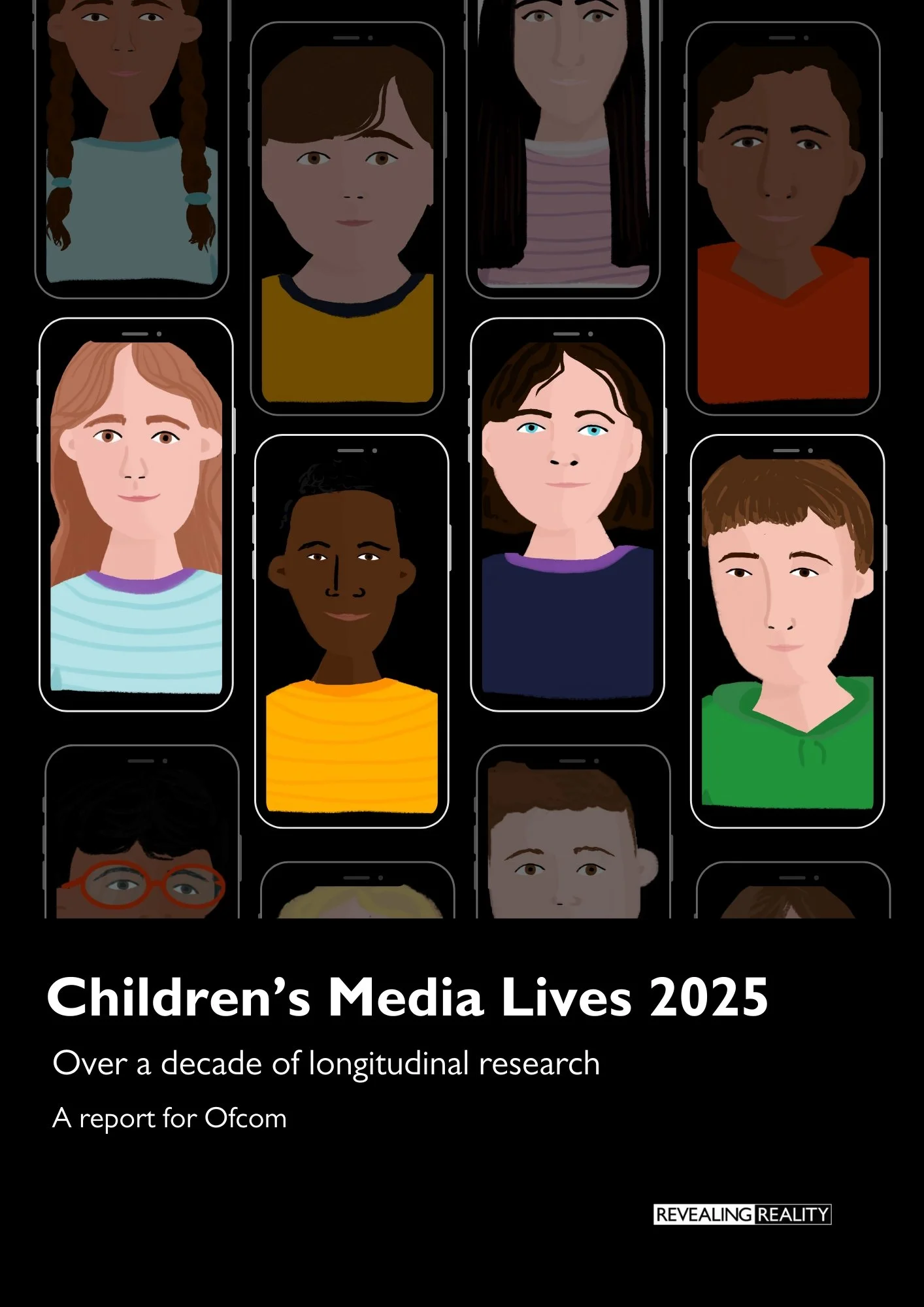
Read the full report
Click here to read the full research report for wave 11
Contact the team
Feel free to contact damon.deionno@revealingreality.co.uk to discuss