
Three arguments you'll hear about children and social media - and why they don't hold up
01/05/2026
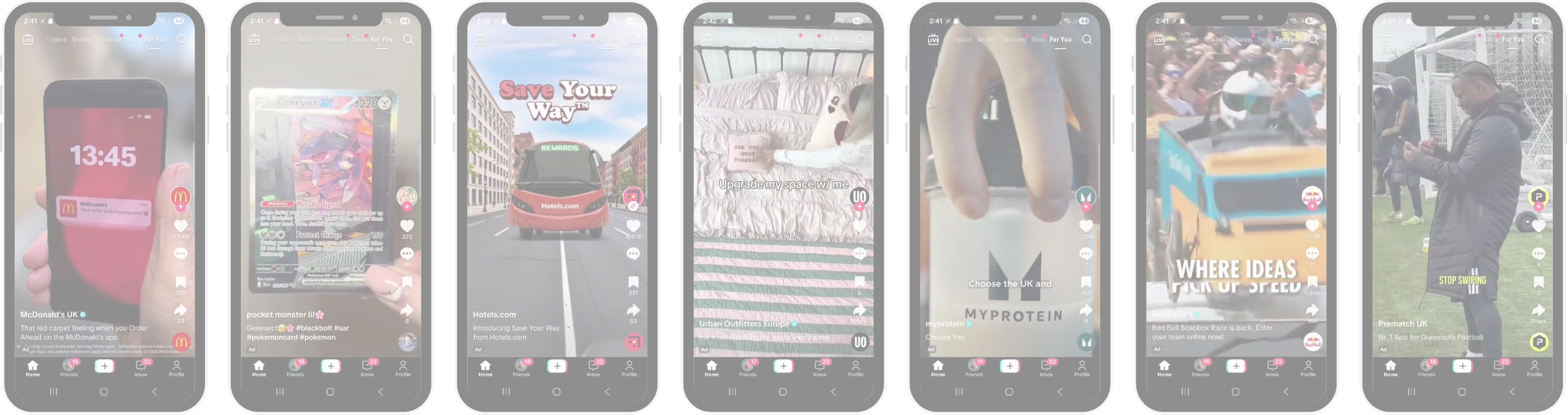
We spend a lot of our time studying how children actually use social media. Not surveying them about whether they enjoy it - watching it. Screen recordings, usage data, hours of it.
When we show it to academics and policy-makers, the reaction is usually the same: there must be more to it. Where's the learning, the connection, the creativity?
We find it genuinely puzzling that so few of the loudest voices in this debate spend much time doing the same. The gap between how social media is discussed in academic and policy circles and what it actually looks like through the eyes of a child is considerable.
Not all screentime is equal - everyone says this, but few seem to be able to apply it. To do so requires an image in your mind of what these different activities look like.
The debate over how to protect children online regularly gets stuck on much-repeated but unhelpful arguments - that don’t hold up once you’ve spent much time actually studying children’s online experiences.
Noah, 14
Charlie, 14
Emma, 14
1
“We need to centre children’s rights and voices”
"Children have a right to access the online world. A social media ban is a blunt tool that unfairly locks children out of the digital realm."
Social media is not the online world. Almost nobody is arguing that children should not have access to the internet in any form. No one’s even really saying they shouldn’t have access to things like messaging services to keep in touch with friends and family. But academics and policy-makers conflate these two things constantly - it is a sleight of hand that has paralysed this debate too many times.
Children's right to access the internet is not in question. Whether they have a right to algorithmic short-form video feeds designed to maximise time on-app is very different.
"We shouldn't take social media away from children - we should take the harmful features out."
The features most commonly identified as harmful to children - short-form video, infinite scroll, algorithmic content selection, popularity metrics, the ease of connecting with strangers - these are social media. They are how platforms like TikTok, Instagram, Snapchat and X generate engagement, and how they make money.
If you remove them, what is left? A platform that probably isn’t commercially viable, or much fun to children. No major social media platform has ever tried to build a version of itself without at least some of these features.
We don’t ask gambling companies to make ‘child safe’ versions of their products because we recognise that it is the gambling mechanic itself that makes it risky for children.
"Vulnerable children rely on social media for community and support."
Do we really think that the best option for lonely vulnerable children - whether disabled, struggling with mental health, or questioning their sexuality - is to connect with strangers on the internet? Even if those strangers actually are fellow children with common experiences, is that a safe and healthy way to build community? Notwithstanding the fact we know these online communities attract predators in huge numbers literally because they are full of vulnerable young people desperately seeking connection.
Children often say in surveys that these communities are important and beneficial to them. But we’ve also spoken to many young people who would have said that at the time but have subsequently come to realise how toxic those spaces were for them - whether by perpetuating their eating disorder, reinforcing Incel ideology, or simply giving them enough pseudo-social comfort to put them off persevering with the messy, confusing real world.
“Children’s voices must lead this debate”
Isn’t it interesting that most organisations never seem to find any children’s voices that disagree with their policy line or politics?
2
“We need better evidence and more research”
"We need large-scale, gold-standard randomised controlled trials that evidence harm before we can justify restricting social media for children."
This standard is only being applied in one direction. The same researchers and policy-makers demanding rigorous proof of harm are rarely asking for the same quality of evidence that social media benefits children. The benefits - that children learn about the world, engage with democracy, connect with communities - are typically stated as fact, without proof.
The evidence that social media is good for children largely boils down to children saying in surveys that they like it. Imagine applying that same standard elsewhere. If children report that they enjoy junk food, gambling, or alcohol, we do not take that as sufficient evidence that these things are good for them, or that restrictions are unjustified.
This is a significant, and consistent, double standard.
“We need causal evidence. Just because social media use correlates with misery doesn’t mean social media causes misery”
Many studies show that children who spend a lot of time on social media are less happy and more anxious. It’s true, this sort of evidence doesn’t prove causality. It could be that social media makes children miserable, or miserable children are more attracted to social media.
But does it matter? There’s no evidence at all that social media solves or even slightly improves mental health. So even if sad children spend a lot of their time online because they’re sad - that’s still very concerning, given it doesn’t help them.
“We need more funding for research”
It is shocking that more attention is not paid to effectively studying how technology shapes childhood, globally.
But skepticism should be applied whenever a researcher’s main recommendation is “more funding for research”. And more scrutiny should be given to what that research actually achieves: the amount of grant funded time spent in webinars repeating self-report survey findings from 5 years ago is significant. The amount of money that goes to actually looking at what children do and see online is miniscule.
3
“Education and empowerment will work better than restrictions”
"Social media restrictions will just be circumvented, or will drive children to darker spaces online."
It is true that any restrictions would not universally prevent children from ever accessing social media. Workarounds exist, and some children will find them. But this is true of every area of life where we restrict what children can access: alcohol, tobacco, gambling, 18-rated films. Very few people argue that these restrictions are therefore counterproductive.
Even with circumvention, restrictions set societal norms about what we think children should and shouldn't do. They give parents an excuse to set boundaries. Many parents currently use the age threshold of 13 as a reason to delay giving their children access to social media, not because it is enforced, but because it exists.
As for darker online spaces - children already find them, and often via more mainstream social media platforms. The onus (and liability) must be on technology companies to prevent children from accessing spaces that are so wholly inappropriate for them. If it’s expensive enough for them to risk harming a child, they’ll find a way. They’re pretty good at tech.
“Delaying social media leaves children more vulnerable when they finally gain access”
This assumes that extensive experience on social media leaves children better equipped to handle it. But what if the reverse is true?
What if time on these platforms leaves children less socially skilled, less able to discern truth and less confident in their own values?
“We need better media literacy education”
Of course educating children about the exploitative business models of these platforms is worthwhile. But do we expect this to counter the persuasive power of a billion-dollar industry, the design power of the largest corporations in the world, and now the escalating power of generative AI?
Nobody designing these platforms was asked to prove they were safe before an entire generation of children grew up on them.
The least we can do is properly understand what that looks like.
If you want to see what we see, come and talk to us.
Sign up to hear more
Contact the team
Feel free to contact damon.deionno@revealingreality.co.uk to discuss